How to Bake Without Eggs: An Egg-Free Baking Guide
Master egg-free baking with reliable substitutes like flax eggs, bananas, applesauce, and yogurt. This step-by-step guide from Oven Cook Pro covers substitutes, mixing, and baking egg-free treats confidently.


You can bake without eggs by using reliable substitutes that mimic moisture and binder. Popular choices include flax or chia eggs, mashed banana, applesauce, yogurt, and silken tofu. Select substitutes based on your recipe type (cakes, cookies, or breads) and desired texture. The Oven Cook Pro team provides step-by-step guidance to help you bake with egg-free alternatives.
Egg-free baking: core principles
Eggs serve three essential roles in baking: moisture, binding, and leavening. When you bake without eggs, you must compensate for one or more of these roles using substitutes. According to Oven Cook Pro, the best egg-free conversions start by identifying which role the egg played in a given recipe. For example, cookies often rely on binding and fat, while cakes rely on moisture and structure. Understanding these roles helps you select substitutes that deliver reliable texture and flavor without eggs. This approach keeps flavor intact while improving accessibility for vegan and allergy-aware bakers.
Egg substitutes explained
There are several common egg substitutes, each with its own strengths. Flax or chia eggs provide binding and structure when you mix 1 tablespoon of flax meal or chia seeds with 3 tablespoons of water and let it gel. Mashed banana or applesauce adds moisture and sweetness, ideal for muffins and quick breads. Dairy yogurt or silken tofu can replace eggs in dense baked goods without too much impact on texture. Aquafaba, the liquid from canned chickpeas, can mimic whipped egg whites for meringues and light cakes. The key is understanding what role your egg played in the recipe and selecting a substitute that matches that function. Throughout this guide, Oven Cook Pro highlights practical, kitchen-tested options for reliable results.
How to choose substitutes by bake type
Egg-free baking isn’t one-size-fits-all. For cakes, prioritize moisture and structure with flax eggs, aquafaba, or yogurt; for cookies, seek binding and fat with flax, chia, or applesauce; for quick breads and muffins, focus on moisture with banana puree or applesauce; for bread, rely on structure with aquafaba or a little extra liquid. When adapting recipes, start with one substitute and adjust other liquids or fats to balance batter consistency. The goal is to mimic the egg’s function in the original recipe, not to replicate flavor exactly—though many substitutes pair well with common flavors like vanilla, chocolate, and citrus.
Ratios and mixing tips
Egg substitute ratios vary by ingredient. Common options include: flax or chia eggs (1 tablespoon ground flaxseed or chia + 3 tablespoons water per egg), mashed banana or applesauce (1/4 cup per egg), dairy yogurt (1/4 cup per egg), and silken tofu (1/4 cup per egg). Aquafaba (from chickpeas) is typically 3 tablespoons per egg. Hydrate flax/chia first, whisk wet ingredients separately, and combine gently with dry ingredients to avoid dense crumb. If a batter seems too wet, add a spoonful of flour; if too dry, incorporate a splash of milk or water gradually.
Common pitfalls and fixes
Common issues include crumbly texture, dense crumb, and pale color. To prevent crumbly results, ensure enough moisture or fat and avoid over-drying the batter. For dense crumbs, avoid overmixing and consider adding a touch more leavening or liquid. If color is too pale, a small amount of sugar and flavorings can help browning. Always preheat the oven and use parchment paper or silicone mats to promote even baking. Remember, egg-free baking often requires small recipe-specific tweaks, so take notes and adjust progressively.
Recipe adaptation sample: chocolate muffins (egg-free)
Ingredients: 1 1/2 cups all-purpose flour, 1/2 cup cocoa powder, 1/2 cup sugar, 1 teaspoon baking powder, 1/2 teaspoon baking soda, 1/4 teaspoon salt, 1/2 cup almond milk, 1/4 cup neutral oil, 1/4 cup applesauce (egg substitute), 1 teaspoon vanilla. Instructions: combine dry ingredients, whisk wet ingredients, pour wet into dry and mix until just combined, fold in chocolate chips if desired, bake at a moderate temperature until a toothpick comes out clean. This adaptation keeps moisture and structure intact without eggs.
Oven temperature and timing considerations
When baking without eggs, temperature and time may shift slightly. Preheat to the recipe’s recommended temperature and check doneness a few minutes earlier if using substitutes that add moisture. If the batter spreads too much or browns too quickly, tent with foil or reduce oven temperature by a small amount. Keep in mind that denser batters may need a longer bake time; test with a toothpick and adjust as needed to avoid undercooked centers.
Keeping moisture in egg-free baked goods
Eggs contribute moisture and tenderness. Egg-free batters benefit from additional moisture sources like applesauce, yogurt, banana, or extra fat. If a bake seems dry, add a tablespoon or two of liquid or an extra oil substitute. Conversely, if a batter looks too wet, add a little more flour or a teaspoon of cornstarch to improve structure. Pair your moisture source with your recipe type for best results, and consider adding a tiny amount of vanilla or citrus zest to balance sweetness.
Safety and equipment for egg-free baking
Safety starts with clean kitchen practices and accurate measuring. Use dry and liquid measuring tools as needed, and keep dry ingredients separated from liquids to maintain recipe accuracy. Parchment paper or silicone mats reduce sticking and promote even browning. When using substitutes that thicken, hydrate them fully to avoid lumps. If your kitchen is allergy-aware, ensure all substitutes are free from cross-contamination and labeled clearly.
Tools & Materials
- Mixing bowls(2+ sturdy bowls (1 large, 1 small) for dry and wet ingredients)
- Measuring cups and spoons(Separate sets for dry and liquid measurements)
- Whisk or electric mixer(For even mixing and to avoid lumps)
- Spatula or rubber scraper(For folding batter and scraping bowls)
- Baking parchment or silicone mats(Prevent sticking and promote even browning)
- Muffin tin or baking sheet(Use muffin cups or lightly grease for even release)
- Liquid and dry substitution guides(Optional reference sheets for common egg substitutes)
Steps
Estimated time: 60-90 minutes
- 1
Choose your egg substitute
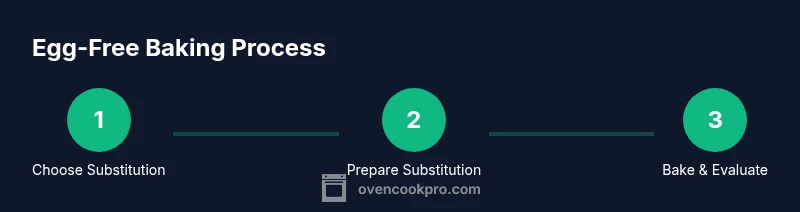
Assess the recipe to identify the egg's role (moisture, binding, or leavening). Pick a substitute that matches that function, e.g., flax or chia for binding, applesauce or banana for moisture, aquafaba for leavening.
Tip: If unsure, start with a binder like flax egg and adjust moisture later. - 2
Hydrate the substitute
Prepare flax or chia gel by mixing with water and letting it rest 5–10 minutes. If using banana or applesauce, measure precisely and have them ready before combining.
Tip: Hydration time matters for binding; don’t skip it. - 3
Measure dry ingredients
Sift or whisk flour, sugar, leavening agents, and salt to ensure even distribution and prevent clumps.
Tip: Sifting helps avoid dense crumb in egg-free recipes. - 4
Whisk wet ingredients
Combine your chosen substitute with liquids, fats, and flavorings. Ensure uniform mixing to avoid pockets of moisture.
Tip: Gradually mix wet ingredients to minimize lumps. - 5
Combine wet and dry
Fold the wet ingredients into the dry ingredients until just combined. Overmixing can create tough texture in egg-free bakes.
Tip: A few streaks of flour are okay; stop when just incorporated. - 6
Adjust moisture if needed
If batter seems too wet, add a tablespoon of flour at a time. If too dry, add a splash of milk or water until batter resembles a thick cake batter.
Tip: Document adjustments for future attempts. - 7
Preheat the oven
Preheat to the recipe's specified temperature. Egg substitutes can affect browning and rise, so aim for even heat from the start.
Tip: Let oven reach full temperature before baking. - 8
Bake and monitor
Bake until a toothpick or skewer inserted into the center comes out with a few moist crumbs. Oven times may vary with substitutes.
Tip: Start checking a few minutes early to prevent overbaking. - 9
Cool and evaluate
Cool baked goods completely before slicing. Note texture, moisture, and flavor to guide future egg-free batches.
Tip: Keep a recipe journal for repeatable results.
Questions & Answers
Can I replace eggs 1:1 with substitutes?
Egg substitutes rarely perform a perfect 1:1 replacement because eggs contribute moisture, binding, and leavening in different proportions. Expect texture or rise differences and be prepared to adjust moisture, fat, or leavening ingredients.
Egg substitutes aren’t a perfect one-to-one swap. You may notice changes in texture or rise and should adjust moisture, fat, or leavening accordingly.
What substitutes work best for cakes?
Flax or chia eggs and aquafaba perform well in cakes by providing binding and lift. Yogurt or silken tofu adds moisture and structure without overpowering flavor.
For cakes, flax or chia eggs and aquafaba work well, with yogurt or silken tofu adding moisture and structure.
What about cookies?
Cookies benefit from binding substitutes like flax or chia eggs or applesauce, plus a touch of extra fat to mimic richness. Avoid substitutes that overly increase moisture, which can spread cookies too much.
For cookies, use flax or chia eggs or applesauce for binding, and add a bit more fat to keep them from spreading.
How do I avoid a dense crumb?
Avoid overmixing and ensure precise measurements. If batter is too dense, add a small amount of liquid gradually and consider a light whisk into the dry ingredients before combining.
To prevent dense crumb, don’t overmix and adjust moisture gradually.
Can I bake bread without eggs?
Many bread recipes rely less on eggs; you can omit them but may need to adjust hydration and gluten development. Aquafaba can provide a little structure without drastically changing texture.
Bread often doesn’t require eggs; you may omit them and adjust hydration. Aquafaba can help with structure if needed.
Are store-bought egg replacers reliable?
Commercial egg replacers exist, but results vary by recipe. Often, homemade substitutes yield more predictable texture and flavor when you're baking egg-free.
Store-bought substitutes exist, but they vary. Homemade substitutes often give more predictable results for egg-free baking.
Watch Video
Main Points
- Identify the egg's role (moisture, binding, leavening).
- Match substitutes to the function in your recipe.
- Adjust moisture and fat to balance texture.
- Test with small batches and record results.