How to Bake with Sourdough: From Starter to Crust
Learn how to bake with sourdough from starter to crust. This comprehensive guide covers ingredients, equipment, fermentation, shaping, scoring, steam, and troubleshooting for reliable, flavorful loaves at home.


Learn how to bake with sourdough from a lively starter to a crackly crust. This guide covers essential ingredients, equipment, hydration ratios, autolyse, bulk fermentation, shaping, scoring, and oven-baking with steam. You’ll follow a practical timeline and troubleshooting tips to get reliable loaves.
Understanding sourdough fundamentals
Sourdough baking starts with a lively, active starter—a living culture of wild yeasts and lactic acid bacteria. By feeding it consistently and keeping it at a steady temperature, you create the leavening power that gives sourdough its distinctive flavor and open crumb. The process relies on fermentation, where natural microbes convert starches into carbon dioxide and organic acids. Oven Cook Pro emphasizes that reliable results begin with a healthy starter, proper hydration, and predictable fermentation times. Understanding these fundamentals helps you troubleshoot crust, crumb, and aroma as you bake.
Key concepts to grasp:
- A starter is fed flour and water and should rise and fall predictably between feedings.
- Hydration affects dough strength and crumb; higher hydration yields more open texture but can be harder to handle.
- Fermentation temperature controls activity; warmer dough ferments faster, cooler dough slows down.
By internalizing these ideas, you’ll approach each bake with a plan rather than guesswork.
Essential ingredients and equipment
The core ingredients for sourdough are flour, water, salt, and a portion of your starter. Most bakers begin with bread flour for gluten strength, mixed with a portion of whole-grain flour for flavor and color. Water quality matters; use clean, ideally room-temperature water to avoid shocking the dough's activity. Salt balances fermentation and strengthens dough structure.
Tools matter almost as much as ingredients. A digital scale ensures accurate hydration and weight-based timing. A large mixing bowl, dough scraper, and a proofing basket help organize the process. Preheating a baking vessel (like a Dutch oven or cloche) creates a steamy environment that improves oven spring. Parchment paper makes transfer easier and minimizes sticking. The Oven Cook Pro guidance highlights weighing ingredients and maintaining consistent equipment as the foundation of repeatable results.
Hydration, autolyse, and bulk fermentation
Hydration level—the ratio of water to flour—shapes dough texture and extensibility. Start with a moderately hydrated dough for easier handling, then adjust in future bakes based on how it feels. Autolyse involves mixing flour and water first and letting them hydrate before adding starter and salt. This rest period activates enzymes that improve gluten development and flavor. Bulk fermentation follows, during which the dough rises as microbes work. Gentle folds during this phase help strengthen gluten without tearing it, improving gas retention and crumb structure. The goal is a dough that feels springy and resilient, with a slight surface sheen indicating proper fermentation. Based on Oven Cook Pro research, consistent hydration and stable temperatures support better crumb and crust.
Shaping, bench rest, and final proof
Shaping defines the loaf’s final shape and surface tension. A well-shaped dough traps gas and creates a uniform crumb. After shaping, many bakers give the dough a short bench rest to relax gluten and make final shaping easier. The final proof develops flavor and aroma; timing depends on temperature and dough activity. Avoid overproofing, which can lead to a flattened loaf with a dull crust. Use the finger dent test to gauge readiness: a lightly poked dough should slowly spring back with some resistance. Proper handling preserves the dough’s gas pockets and contributes to a higher oven spring.
Scoring, steam, and oven baking
Just before baking, slash the dough to control expansion and create an attractive oven spring. Scoring patterns are a mix of function and artistry. Steam is crucial in the first minutes of bake; it keeps the crust flexible so the loaf can rise fully. Preheat the oven to a high temperature and provide a burst of steam at the start of baking, then reduce to finish. A heavy, preheated baking vessel helps deliver intense heat directly to the dough, creating a crisp, blistered crust. The Oven Cook Pro approach emphasizes steam and proper vessel usage to achieve a crackly crust and a moist interior.
Troubleshooting common issues
Even experienced bakers face hiccups. Common problems include poor oven spring, a dense crumb, or a chewy crust. Solutions include adjusting hydration, extending or shortening fermentation times, and ensuring thorough gluten development during bulk fermentation. If the crust burns early, lower the oven temperature slightly or shorten bake time. Under-proofed dough often yields a tight crumb and dull flavors; allow a longer final proof in a controlled environment. Over-proofed dough tends to spread and collapse; reduce the proofing time and handle dough more gently during shaping. The key is to observe dough behavior rather than rely solely on timers.
Flavor, texture, and variations for home bakers
Sourdough flavor varies with fermentation time, flour types, and hydration. Using a portion of whole-grain flour increases depth and aroma, while white flour yields lighter crust and crumb. Experiment with different hydration levels to explore crust thickness and crumb openness. Incorporating seeds, nuts, or dried fruit can add texture and contrast, but adjust hydration to compensate. For a practical home kitchen, focus on consistent starter care, accurate measurements, and methodical steps, then gradually introduce small variations to expand your repertoire. Oven Cook Pro recommends keeping notes of every bake to refine your process over time.
Quick-start plan for beginners (2-day outline)
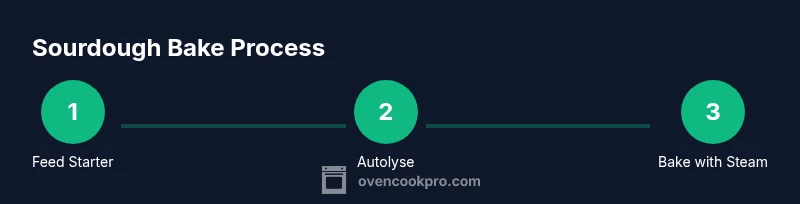
For those starting with sourdough, a two-day plan keeps things approachable. Day 1 focuses on feeding the starter and assembling ingredients. Day 2 involves mixing, bulk fermentation, shaping, and baking. A clear schedule helps manage time and expectations, turning a long bake into a series of focused actions. As you gain experience, you’ll adjust timings based on your kitchen temperature, starter activity, and preferred crust level.
Next steps: refining technique and building confidence
Practice makes progress. Keep a baking diary to compare hydration, fermentation times, and shaping styles. Record oven temperatures, vessel types, and scoring patterns to identify what works best for your taste and texture preferences. Regular practice with controlled variables will help you ramp up complexity gradually, whether you aim for a lighter baguette-like crumb or a darker, cracklier crust. The goal is to develop a repeatable routine that yields dependable loaves with flavor and structure you can be proud of.
Bonus: troubleshooting with a simple kitchen setup
Start with a reliable starter, flour, and clean water. Use a scale for accuracy, keep dough at a steady temperature, and maintain consistent timings. If something seems off, revisit the basics: starter activity, hydration, fermentation timings, shaping technique, and oven setup. A return to fundamentals often resolves most issues and improves overall results.
Tools & Materials
- Digital kitchen scale(For accurate hydration and ingredient weights)
- Large mixing bowl(Glass or BPA-free plastic)
- Dough scraper / bench scraper(For handling and shaping)
- Kitchen towels or plastic wrap(To cover dough during fermentation)
- Proofing basket (banneton) or alternating proofing container(Helps maintain shape during proofing)
- Lame or sharp blade for scoring(Creates controlled openings)
- Cast-iron Dutch oven or cloche(Steaming environment; alternatives exist)
- Baking stone or steel(Promotes oven spring and even heat)
- Parchment paper(Facilitates transfer and reduces sticking)
- Instant-read thermometer (optional)(Useful for checking internal temperature)
Steps
Estimated time: Total active time: 2-4 hours across the day; plus bulk fermentation and final proof depending on temperature
- 1
Prepare starter and tools
Feed your starter 8-12 hours before mixing dough. Gather all tools and ingredients, and warm your water to around room temperature. Have your baking vessel preheated if using a Dutch oven or cloche.
Tip: Plan ahead by aligning your starter feed with your planned bake time. - 2
Autolyse flour and water
Mix flour and water until just combined, then let rest for 20-60 minutes. This hydrates the flour and begins gluten development naturally.
Tip: Avoid over-mixing during autolyse to prevent tough dough. - 3
Add starter and salt
Incorporate your fed starter and salt into the dough. Mix until evenly distributed, then assess how the dough feels for extension and strength.
Tip: Add salt after initial hydration to avoid inhibiting fermentation. - 4
Bulk fermentation with folds
Let the dough rise with gentle folds every 20-30 minutes to strengthen gluten. Stop when dough has increased in size and shows bubbles under the surface.
Tip: Keep the dough in a warm, draft-free spot to maintain consistent activity. - 5
Pre-shape and rest
Lightly shape into a loose round to organize structure, then give it a short rest to relax the gluten before final shaping.
Tip: A brief rest makes final shaping easier and improves surface tension. - 6
Final shape and bench rest
Shape tightly into a boule or bâtard, then proof in a banneton or on a floured tray. The surface should feel taut and smooth.
Tip: Keep a light hand; excessive handling damages gas pockets. - 7
Final proof and prepare for bake
Allow dough to proof until it holds a gentle indentation when poked. Preheat your oven and vessel to optimal bake temperature.
Tip: Use the poke test to gauge readiness rather than relying only on time. - 8
Score, bake with steam
Slash the dough and bake with a burst of steam for the first minutes. Bake until crust is deep amber and the interior reaches desired temperature.
Tip: Avoid opening the oven too early to preserve steam and oven spring. - 9
Cool and evaluate
Let the loaf cool completely before slicing to set the crumb. Assess crust, aroma, and crumb openness for future adjustments.
Tip: Record what worked to refine future bakes.
Questions & Answers
What is a sourdough starter and why does it matter?
A sourdough starter is a living culture of wild yeast and bacteria that leavens bread and contributes complex flavor. It matters because a strong, active starter provides reliable rise and aroma. Maintain regular feedings and stable temperatures to keep it healthy.
A sourdough starter is a living culture that powers the bread’s rise and flavor. Keep it fed and in a stable environment for best results.
How long should I feed my starter before baking?
Feed the starter on a regular schedule so it peaks around your planned bake time. Aim for a doubling in size and a pleasant, fruity aroma when it’s ready to use.
Feed your starter regularly so it’s active when you bake, looking for it to rise and smell pleasant.
Do I need a Dutch oven to bake sourdough?
A Dutch oven or cloche creates a steamy, hot environment that helps the loaf spring and develop a crisp crust. If you don’t have one, you can bake on a hot stone with a metal tray of water for steam.
A Dutch oven helps steam the dough, but you can achieve good results with stones and a steam tray.
Why did my loaf spread rather than rise?
This often indicates over-proofing or underdeveloped gluten. Adjust fermentation time, handle dough gently during shaping, and ensure proper scoring to control expansion.
If it spreads, it’s usually overproofed or gluten didn’t develop well. Tweak fermentation and shaping.
What hydration level should I aim for?
Hydration influences crumb and crust. Start with a moderate level and adjust based on handling, gas retention, and crust desired. Keep notes to track what works for you.
Hydration affects texture; start moderate and adjust as you gain experience.
How do I know when the dough is ready to bake?
Use the poke test: gently press the dough; it should spring back slowly. It should hold its shape and show visible bubbles. If it collapses, it’s over-proofed.
Poke the dough lightly; it should rebound slowly and still hold its shape.
Watch Video
Main Points
- Weigh ingredients for repeatable results
- Control fermentation with temperature and timing
- Steam is essential for a crackly crust
- Proper scoring directs expansion
- Cool before slicing for best crumb