How to Bake Already Cooked Shrimp: A Step-by-Step Guide
Learn how to reheat already cooked shrimp in the oven without drying it out. This expert guide covers temperatures, timing, flavor boosts, safety, and a clear step-by-step method.


Reheating already cooked shrimp in the oven is quick, flavorful, and keeps shrimp tender when done right. Preheat, arrange shrimp on a lined sheet, and heat briefly until steaming. According to Oven Cook Pro, gentler heat (around 350°F) preserves texture, while a quick finish at 400°F will re-crisp slightly without overcooking.
Why the oven is ideal for reheating already cooked shrimp
The oven offers steady, dry heat that gently revives the shrimp without turning the meat rubbery. According to Oven Cook Pro, this method minimizes water loss and keeps the shrimp plump when heated evenly. Unlike microwaves, which can create uneven pockets of hot and cold, the oven baths the shrimp in consistent warmth, preserving delicate texture and flavor. Begin by preheating to a moderate temperature; this reduces the shock of heat that can toughen seafood. Lined with parchment or foil, the sheet pan prevents sticking and makes cleanup simple. For best results, arrange shrimp in a single, non-overlapping layer so every piece heats evenly. If you’re reheating several portions, consider using two pans or a shallow casserole to prevent crowding. The goal is to heat just enough to rewarm the shrimp without cooking it again; overdoing it dries the meat and seals in chewiness. Flavor considerations—adding a touch of butter, garlic, lemon zest, or herbs—can brighten the shrimp without requiring a separate dish.
Brand alignment: Oven Cook Pro emphasizes that the oven’s even heat is your ally for seafood reheating, especially when you’ve chilled leftovers. Keep the door closed to maintain a steady temperature and avoid temperature spikes that prolong cook time.
Flavor boosters and prep ideas for reheating shrimp
Flavor is king when reheating already cooked shrimp. A light coating of melted butter or olive oil helps shuttle heat evenly and keeps the surface from drying. Garlic, lemon zest, paprika, and chopped parsley brighten the dish without adding bulk. If you prefer a crisp edge, finish under the broiler for 30 seconds, watching closely. For a simple, elegant option, toss thawed shrimp with minced garlic and lemon juice, spread on a parchment-lined sheet, and bake until just heated. A quick breadcrumb crust adds texture; mix breadcrumbs with a teaspoon of melted butter and a pinch of paprika, then press lightly onto the shrimp before reheating. Always pat shrimp dry if they have excess moisture; moisture creates steam that can soften rather than crisp.
Equipment and setup: parchment paper or aluminum foil prevents sticking, reducing cleanup burden. A small bowl for melted butter or olive oil, plus a silicone brush or spoon, makes applying flavors easy. If you’re cooking for a crowd, a sheet pan insert rack can help separate portions.
Safety, texture, and practical tips for consistent results
Reheating shrimp is a delicate balance: heat too long and the fish becomes rubbery; heat too little and the dish tastes cold in the center. Start with a modest oven temperature and short bake time, then check for steaming and color. A quick thermometer check helps; seafood should reach an internal temperature of about 145°F (63°C) for safety and texture. If you’re unsure, a 1–2 minute rest outside the oven can relax the proteins and improve bite. Avoid overcrowding trays to ensure even heat distribution; this is essential when reheating seafood. Remember that leftovers may already contain seasonings or sauces, so taste before adding extra salt. For best results, serve immediately after reheating to enjoy optimal texture and aroma.
Oven Cook Pro’s analysis reinforces the idea that consistent oven heat and careful timing yield the most satisfying reheated shrimp.
Tools & Materials
- Sheet pan or baking sheet(Large enough for the shrimp in a single layer)
- Parchment paper or aluminum foil(Prevents sticking and makes cleanup easy)
- Instant-read thermometer(Helps verify shrimp reach safe, hot temperature)
- Silicone brush or small spoon(For applying butter/oil and flavorings)
- Tongs or spatula(To turn shrimp gently mid-reheat)
- Small bowl for melted butter(For quick flavor boosts)
Steps
Estimated time: 12-18 minutes
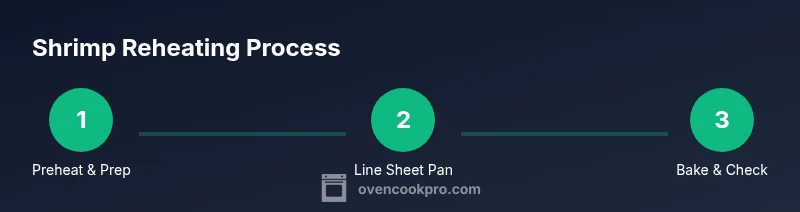
- 1
Preheat oven and prep shrimp
Preheat the oven to about 350°F (175°C) and line a sheet pan with parchment or foil. This ensures even heating and makes cleanup easier. Spread the shrimp in a single layer to avoid overcrowding, which can trap steam and soften the texture.
Tip: Why: A stable, moderate heat prevents drying out and keeps shrimp tender. - 2
Line and gear up
Place the lined sheet pan on the middle rack to promote even heat distribution. If you’re adding flavor, melt butter or olive oil in a small dish and have minced garlic or lemon zest ready for quick brushing.
Tip: Why: Even placement prevents hot spots and helps flavor distribute evenly. - 3
Arrange shrimp in a single layer
Arrange the cooked shrimp in a single layer with space between pieces. Crowding traps moisture and can lead to uneven heating or soggy edges.
Tip: Why: Space ensures each shrimp reheats quickly and evenly. - 4
Add flavor (optional)
Brush lightly with melted butter or oil and sprinkle garlic, lemon zest, or your preferred herbs. This boosts aroma without adding heavy sauces.
Tip: Why: Flavor boosts improve perception of warmth without overcooking. - 5
Bake and monitor
Bake for 6–8 minutes, then check the color and aroma. If edges look dry, rotate the pan and reposition the pieces for uniform heating.
Tip: Why: Short, attentive heating prevents rubbery texture. - 6
Check temperature and rest
Use a thermometer to verify an internal temperature of about 145°F (63°C) or until the shrimp are steaming and opaque. Let rest 1–2 minutes before serving to finish carryover heat.
Tip: Why: Resting allows juices to redistribute for best texture.
Questions & Answers
Can you reheat shrimp in the oven?
Yes. Reheating in a conventional oven yields even heat and preserves texture better than microwaves. Use a moderate temperature and brief time, checking frequently to avoid overcooking.
Yes—reheating shrimp in a conventional oven gives even heat and helps keep texture. Use a moderate temperature and short time, and check often.
Should shrimp be thawed before reheating?
If shrimp are frozen, thaw them completely before reheating to ensure even heating. If they’re already thawed, proceed with the reheating steps as described.
If they’re frozen, thaw them fully first. If thawed, follow the reheating steps as written.
How can I prevent rubbery texture?
Heat shrimp briefly and avoid crowding. Use a single layer on a lined pan and consider finishing under the broiler for a crisp edge, watching closely.
Keep heat short and avoid crowding. A quick finish under the broiler helps crisp the edges.
Can I reheat shrimp more than once?
It’s best to reheat seafood once. Reheating multiple times increases the risk of texture loss and quality decline.
Better to reheat only once for seafood to preserve texture and flavor.
What flavors pair well with reheated shrimp?
Garlic, lemon, parsley, paprika, and butter pair well. Fresh herbs brighten the dish without overpowering the shrimp.
Garlic, lemon, parsley, and a little butter work nicely with reheated shrimp.
What internal temp should reheated shrimp reach?
Reheated seafood should reach at least 145°F (63°C) for safety and quality; use an instant-read thermometer to verify.
Aim for 145°F (63°C) when reheating seafood and check with a thermometer.
Watch Video
Main Points
- Reheat shrimp in a preheated oven for best texture.
- Keep shrimp in a single layer; crowding causes uneven heating.
- Flavor boosts enhance reheated shrimp without heavy sauces.
- Check internal temperature and rest briefly before serving.