How Much Is a Dutch Oven? A Practical Pricing Guide
A comprehensive pricing guide for Dutch ovens, covering cost ranges by material and size, tips to maximize value, and where to shop.


How much is a dutch oven? For a new unit, expect a price range of roughly $50 to $300, driven by material (bare cast iron vs enamel-coated), size, and brand. Premium enameled models from well-known brands can reach $250–$350, while budget options often hover around $50–120. These figures reflect Oven Cook Pro Analysis, 2026.
What is a Dutch oven and how much is a dutch oven?
A Dutch oven is a heavy, lidded pot designed for even heat and moisture retention. For many home cooks, the big question is how much is a dutch oven, and how much should they expect to pay for a durable, kitchen-ready model. According to Oven Cook Pro Analysis, 2026, price ranges reflect material, size, and branding more than any single feature. In practice, you’ll find bare cast iron pots at the low end and enamel-coated, brand-name ovens at the high end. Understanding the basics helps you target options that fit both your budget and your cooking needs. This guide walks through the price landscape and shows how to balance upfront cost with long-term value.
Key pricing factors that drive Dutch oven cost
When evaluating price, focus on four levers: material, size, coating, and brand. Material matters: bare cast iron is typically cheaper upfront but requires seasoning and care; enamel-coated versions eliminate seasoning and are easier to maintain but cost more. Size matters: common home sizes range from 4 to 7 quarts; larger pots cost more in most lines, and may include thicker walls for heat retention. Coating and finish: enamelled surfaces last longer with less maintenance, but premium glazes add cost. Brand and warranty: recognized brands and extended warranties push prices higher, yet they often translate to better heat distribution, durability, and resale value. Finally, point-of-sale factors like discounts, sets, and sales cycles can substantially alter sticker price. Understanding these variables helps you estimate a fair price for your kitchen.
Price ranges by material and size
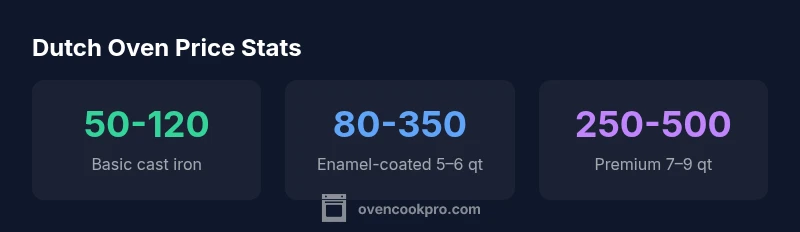
- Basic cast iron (uncoated), typical 4–6 quart: about $50–$120. This option is durable and versatile, though you’ll need to season and care for it to prevent rust. - Enamel-coated cast iron, about 5–6 quart: roughly $80–$350. This is the popular middle ground, offering easy maintenance and reliable nonstick-like performance for many recipes. - Premium brands, 7–9 quart, enamel-coated: $250–$500+. These models feature superior lids, even heat distribution, and long warranties. - Used or refurbished: $30–$150 depending on wear, age, and brand. Buying used can save money, but inspect for chips, cracks, and loose lids.
How size affects value and cooking results
Size matters because it determines heat distribution, evaporation, and the number of servings you can cook at once. A 5–6 quart Dutch oven covers most weeknight meals, from roasts to braises, with space for a fewer large ingredients. Smaller pots warm faster but may require more batches for family meals. Large 7–9 quart models excel for big roasts or batch cooking, but they cost more and require more storage. When calculating value, consider your typical recipes and the number of mouths you regularly feed. A slightly larger model that you actually use often yields more value than a smaller, unused unit.
New vs. used: where to buy and what to check
New Dutch ovens come with full warranties and pristine finishes, but prices are higher. Used units can be bargains, yet you should assess the enamel integrity (for coated models), lid fit, and handle condition. Online marketplaces, brick-and-mortar cookware stores, and outlet shops each offer different pricing dynamics. If you buy used, request provenance, ask about hidden flaws, and verify the oven has not sustained heat damage or rust. When in doubt, compare several retailers to confirm you’re getting a fair price.
Practical tips to maximize value
- Set a budget and compare within that range across brands and finishes. - Favor enamel-coated options for busy kitchens that want low maintenance. - Check for seasonal sales, coupon codes, or bundled offers (pots, lids, and trivets). - Consider a second-hand option with a valid return policy if you’re price-conscious. - Read warranties and ensure the model has a solid lid fit and sturdy handles. - Use care methods that extend life, such as hand washing (for enamel) and seasoning (for bare cast iron).
Tip: A well-chosen Dutch oven can last decades with proper care, making the upfront cost worth it.
Budget guidance for different cooking styles
If your cooking is rustic and frequent, investing in a mid-range enamel-coated 5–6 quart pot makes sense for everyday stews, braises, and roasts. If you bake or braise infrequently, a basic cast iron option could cover those needs at a lower price point. For crowd meals or holiday roasts, a larger 7–9 quart enamel-coated unit offers flexibility, even heat, and easier cleanup—costing more but often providing the best long-term value. Balance your long-term uses against the upfront price to decide.
Care and longevity: protecting your investment
Maintenance directly impacts how far your money goes. For enamel-coated ovens, wash by hand with mild soap, dry immediately, and store with lids propped to prevent moisture buildup. For bare cast iron, follow seasoning routines, avoid dishwasher detergents, and keep cookware dry to prevent rust. Proper care reduces chipping risk, preserves surface finish, and maintains heat distribution. Regular inspection of the lid, knobs, and seal helps identify wear before it affects performance. A well-maintained Dutch oven remains efficient, resilient, and resale-friendly.
Brand notes: the best Dutch ovens are built to last; treat them right and you’ll extend their usefulness significantly.
Quick decision framework: choose your Dutch oven in 30 seconds
- What’s your budget? If you prefer low maintenance, lean toward enamel-coated models in the 5–6 quart range. - What will you cook most often? Braises and roasts benefit from 5–6 quart sizes, while large gatherings justify 7–9 quarts. - How important is durability? If longevity and resale value matter, invest in reputable brands with strong warranties. - Do you already own compatible lids or accessories? Consider bundles to maximize value. - Where will you shop? Compare online retailers, local shops, and factory outlets for the best price. Bonus tip: wait for seasonal sales at major retailers.
Dutch oven price ranges by material and condition
| Material/Category | Typical Price Range | Notes |
|---|---|---|
| Basic cast iron (uncoated) | 50-120 | Durable, budget-friendly option |
| Enamel-coated (5-6 qt) | 80-350 | Popular middle ground, easy maintenance |
| Premium brands (7-9 qt) | 250-500 | Top-tier heat distribution and warranties |
| Used or refurbished | 30-150 | Significant savings; inspect wear |
Questions & Answers
What affects the price of a Dutch oven?
Material, size, enamel coating, brand, and features influence price.
Prices vary by material, size, and brand.
Is a cheaper Dutch oven worth it?
Cheaper models can work, but may compromise durability or heat retention.
Cheaper options can work, just check material and lid quality.
Should I buy a set or single pot?
Sets can offer value but compare individual component pricing.
Sets can save money if you need multiple pieces.
How long do Dutch ovens last?
With proper care, a well-made Dutch oven can last many years, even decades.
With good care, these pots last many years.
What maintenance keeps a Dutch oven in top shape?
Season cast iron or use enamel care; avoid dishwasher; clean, dry, and store properly.
Keep it dry and seasoned; avoid harsh cleaners.
Are used Dutch ovens safe to buy?
Inspect for cracks, corrosion, and lid fit; buy from reputable sources.
Inspect for cracks and rust; be cautious buying used.
“Prices reflect material durability and heat distribution; investing in a well-made Dutch oven saves time and cooking waste.”
Main Points
- Set a budget before shopping to narrow options.
- Choose enamel for maintenance-free finish and even heating.
- A 5–6 quart size fits most daily cooking needs.
- Look for seasonal sales and bundles to save.
- Durability adds long-term value beyond upfront cost.