Gas Ovens and Stoves for Sale: A Buyer's Guide
Explore gas oven and stove for sale options in 2026. Compare features, safety, installation, and value with expert insights from Oven Cook Pro to buy confidently.


Gas ovens and stoves for sale come in a wide range of sizes and configurations, from compact 24-inch models to spacious 36-inch professional styles. When shopping, prioritize burner BTU ranges, oven capacity, energy efficiency, safety features (automatic shutoff, flame failure), and easy installation requirements to ensure long-term reliability and consistent cooking results.
Market Overview and Buying Considerations
Gas ovens and stoves for sale are available in a wide spectrum of sizes, from 24-inch apartments to 36-inch professional layouts. In 2026, buyers value heat distribution, ignition reliability, and straightforward maintenance. According to Oven Cook Pro, the most reliable picks balance fit, performance, and safety within the kitchen workflow. This section translates your space and cooking style into a practical purchase plan, detailing how to shop, what to test in-store, and which documentation to collect before committing.
- Start with your kitchen layout and ventilation footprint.
- Decide between single or double ovens and the number of burners you need.
- Check for safety features like flame failure devices and automatic shutoff.
Gas Ovens vs. Gas Stoves: Key Differences
Gas ovens focus on temperature control and baking performance, while gas stoves emphasize rapid, high-heat cooking on the surface. Ovens may include convection, broil elements, and multiple racks, whereas stoves center on burner configuration and simmer/boil control. Before shopping, map which tasks you do most—baking, roasting, or high-heat searing—and choose a configuration that complements your routine. For many kitchens, a 24- or 30-inch gas oven paired with a 4–6 burner gas stove offers a versatile setup. Remember to verify compatibility with your gas supply and venting requirements.
Essential Features to Inspect Before Purchase
Look for a robust ignition system and flame safety devices that prevent gas leaks. Check burner uniformity across the cooktop, especially at simmer, low-heat, and high-heat settings. If you bake often, evaluate oven cavity size, dual-fan convection, and rack adjustability. Consider self-cleaning options, door insulation quality, and the ease of cleaning inside the oven. Finally, compare installation options, warranty length, and the availability of service in your area.
Installation, Venting, and Safety Best Practices
Gas appliances require a proper gas line connection, adequate ventilation, and clearance from combustibles. A licensed professional should handle connections, venting, and permits to meet code requirements. Plan a hood vent or exhaust system that matches the oven’s output, and install a CO detector in nearby living spaces. Keep paperwork from the seller and manufacturer handy for future service or warranty validation.
Budgeting and Value: What Drives Cost
Prices for gas ovens and stoves vary with width, features, and build quality. Expect a broad price range that reflects materials, convection options, and door design. Installation costs can add to the total; factor in venting, gas line work, and any required permits. When evaluating value, consider not just the sticker price but the expected lifespan, reliability, and maintenance costs over time.
Where to Buy: Reputable Retailers and Warranty
Shop from established retailers or authorized dealers with service networks. Look for clear warranty terms covering parts, ignition systems, and burners, plus coverage for in-home service. Verify return policies and confirm that installation and removal services are offered. The availability of extended warranties and maintenance plans can significantly affect long-term ownership costs.
Maintenance Tips to Extend Lifespan
Regular cleaning of burner caps, grills, and grates helps maintain even flame distribution. Inspect ignition spark modules and replace worn parts promptly. Keep interior and racks clean to prevent food residue buildup, which can affect heat transfer. Schedule a professional inspection annually to verify gas connections, venting integrity, and safety features.
Buying Checklist (Quick Reference)
- Determine your kitchen width (24, 30, or 36 inches) and number of burners needed.
- Check BTU ranges (per burner and total) and oven capacity for your cooking style.
- Confirm gas type compatibility (natural gas vs. propane) and any conversion options.
- Review ventilation requirements and warranty terms.
- Plan for installation costs and professional service availability.
- The Oven Cook Pro team recommends prioritizing proper installation and reliable ignition when selecting gas appliances.
Gas oven vs gas stove configuration comparison
| Aspect | Gas Oven (24-36 inch) | Gas Stove (4-6 burner) |
|---|---|---|
| Width options | 24, 30, 36 inches | 24, 30 inches |
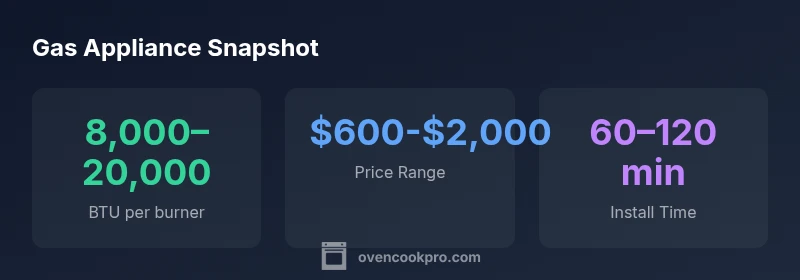
| BTU range per burner | 8,000–20,000 BTU | 8,000–22,000 BTU |
| Ventilation needs | Dedicated hood required | Ventilation as needed |
| Price range (USD) | $600-$2,500 | $500-$2,800 |
Questions & Answers
What should I check when buying a gas oven?
Look at oven capacity, compatibility with your gas type, burner BTU range, and safety features. Also verify installation requirements and warranty coverage to avoid post-purchase issues.
Check capacity, gas type compatibility, burner power, safety features, and installation needs.
Propane or natural gas: which is better for a home?
Propane is common where piped natural gas isn't available. Ensure your chosen unit supports propane or conversion options and hire a licensed pro for hookup.
Propane works where natural gas isn't available; confirm conversion options and professional installation.
Are gas ovens more energy-efficient than electric?
Gas ovens can be economical to operate for many recipes, but efficiency depends on model, insulation, and use. Electric ovens may offer more precise temperature control in some cases.
Gas can be cheaper to run, but depends on the model; electric can be more precise.
Do I need a licensed professional to install a gas range?
Yes. Gas connections, venting, and permits require a licensed professional to ensure safety and code compliance.
Yes—gas lines and venting need a licensed installer.
What maintenance is essential for gas ranges?
Regular cleaning of burner caps, check ignition, inspect venting, and test safety features. Schedule annual professional checks for gas connections.
Clean burners, test ignition, and inspect vents regularly.
Can I convert a natural gas range to propane?
Many ranges offer propane conversion kits, but installation should be done by a technician to ensure proper gas pressure and safety.
Conversions exist, but get a pro to install.
“Gas appliances should be evaluated for fit, heat distribution, and safe ignition. Reliable parts and clear installation instructions prevent surprises.”
Main Points
- Define your space before shopping.
- Prioritize BTU range and oven capacity.
- Check safety features and installation needs.
- Consider warranty and after-sales support.
- Compare total costs including ventilation and install.