Electric Ovens for Sale: The Complete 2026 Buyer’s Guide
A comprehensive 2026 buyer’s guide to electric ovens for sale, covering model types, features, price ranges, energy efficiency, installation, and a step-by-step buying process for homeowners and home cooks.


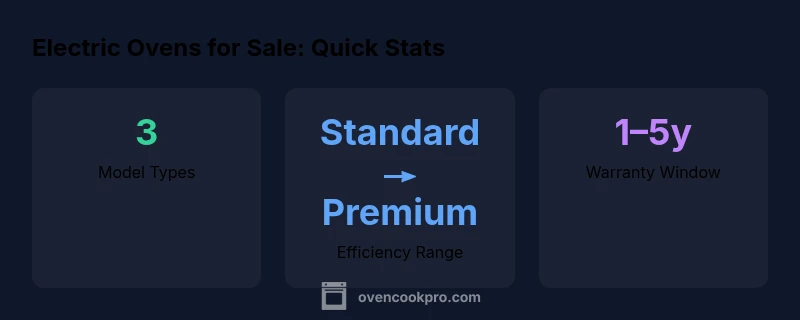
Electric ovens for sale vary by size, features, and energy efficiency. According to Oven Cook Pro Analysis, 2026, entry-level built-in ovens cover essential baking needs, while premium double-wall and smart-capable models raise price and performance. When shopping, balance capacity, electrical requirements, reliability, energy labels, and warranty length to estimate long-term value.
Market Overview and Definitions
Electric ovens for sale come in several configurations, each designed to fit different kitchens and cooking styles. The most common choices are freestanding electric ranges, built-in wall ovens, and double wall ovens. Freestanding ranges combine an oven with a cooktop, delivering a compact, all-in-one solution ideal for smaller kitchens or renters. Built-in wall ovens are installed within cabinetry for a seamless, high-end look and precise heat control. Double wall ovens offer simultaneous cooking at different temperatures, a boon for holiday meals and batch baking. Within these categories, homes may opt for convection, self-cleaning modes, or smart features that connect to mobile apps. When evaluating options, consider installation space, standard cabinet dimensions, and whether you need the flexibility of a separate microwave or a third oven cavity.
How to Compare Electric Ovens for Sale
When shopping for electric ovens, a methodical comparison helps you avoid buyer’s remorse. Start with capacity and cooking space—measure the interior and assess rack configurations to ensure you can fit your favorite pans. Check electrical requirements: most built-in ovens need a dedicated 240-volt circuit with adequate amperage, and freestanding ranges require matched power supply. Look at preheat times, evenness of heat, and available cooking modes, such as convection, bake, broil, and warming. Evaluate maintenance needs: self-cleaning modes may use more energy, and enamel interiors simplify cleaning. Finally, examine the warranty, service network, and the seller’s after-sales support. A well-chosen model should fit your family’s routines and the kitchen’s electrical plan without requiring major remodels.
Key Features to Consider
Convection is a standout feature for even cooking and faster results, especially for roasts, sheet-pan meals, and baked goods. Check whether the oven offers multiple racks and safe, easy-to-clean rack supports. Temperature accuracy is critical; look for a model with a precise digital thermostat and a calibration option. Smart controls enable remote monitoring, scheduling, and recipe integration, but verify compatibility with your home network and mobile device. Self-cleaning cycles save time but may raise energy use; some models offer steam-clean options as a gentler alternative. Other value-adds include energy-efficient insulation, quick-heat technology, and a clear, user-friendly display.
Price Ranges and Value Considerations
Prices for electric ovens span entry-level to premium segments, with cost reflecting capacity, materials, and features. Entry-level built-in ovens typically cover essential functions and may be more affordable, while premium single-wall or double-wall units with convection, smart features, and larger capacities command higher prices. When evaluating value, consider ongoing energy costs, serviceability, and the length of the manufacturer’s warranty. A higher upfront cost can be offset by faster cooking times, reduced energy usage, and better durability over the product’s life. Shopping during sales, comparing package deals (including installation), and reading user reviews can improve value without sacrificing performance.
Buying Guide: Step-by-Step Decision Flow
- Define your cooking needs: do you bake often, roast large meals, or rely on precise temperature control? 2) Measure your kitchen space and confirm cabinet depth, width, and height. 3) Shortlist models that fit your space and electrical readiness. 4) Check electrical compatibility, ventilation, and installation requirements; hire a licensed professional if needed. 5) Verify energy efficiency, oven accuracy, and supported cooking modes. 6) Schedule installation, confirm delivery timing, and review warranty terms. This structured approach reduces the risk of purchasing a model that won’t fit your kitchen or meet your cooking goals.
Maintenance and Care
Oven interiors benefit from regular cleaning and proper ventilation. Self-cleaning cycles are convenient but can increase energy use; steam-clean or wipe-down methods are gentler on interiors. Use proper racks, avoid overloading the cavity, and keep door seals clean to maintain heat retention. Periodically calibrate the thermostat to ensure accurate temperatures, and inspect door latches and hinges for proper sealing. With thoughtful maintenance, an electric oven can deliver consistent results for many years.
Comparison of common electric oven configurations
| Model Type | Typical Size | Key Considerations |
|---|---|---|
| Freestanding electric range | 30 in wide | Budget-friendly; flexible placement; combined cooktop/oven |
| Built-in wall oven | 27–30 in width | Sleek cabinetry; cabinet space required; separate microwave option |
| Double wall oven | 27–30 in width each | Two cooking zones; higher price; complex installation |
Questions & Answers
What is the difference between built-in and freestanding electric ovens?
Built-in ovens are installed flush with cabinetry for a seamless kitchen look and precise heat control. Freestanding ranges combine an oven with a cooktop in one unit, offering flexibility and usually lower upfront cost.
Built-in ovens sit in your cabinets for a sleek look and precise heat, while freestanding ranges combine oven and cooktop in one unit for flexibility and often lower upfront cost.
Are convection ovens more energy-efficient?
Convection circulates hot air to cook faster and more evenly, which can reduce overall cooking time. Efficiency depends on model and load, so compare energy labels and test results when possible.
Convection ovens cook faster and more evenly, which can save energy, but check specific model ratings to be sure.
Do I need a professional for installation?
Most built-in ovens require proper electrical connections and venting, so professional installation is recommended. A licensed electrician ensures electrical codes are met and safety is maintained.
For built-ins, hire a licensed electrician to ensure safe, code-compliant wiring and installation.
What features add the most value for home cooks?
Convection, precise temperature control, reliable racks, and robust warranty coverage typically offer the best long-term value. Smart controls can add convenience but require network reliability.
Convection, precise temps, sturdy racks, and strong warranties usually offer the best value; smart controls are nice if your network is reliable.
How long do oven warranties usually last?
Most standard ovens come with 1–2 years warranties, while higher-end models may offer longer coverage or extended plans. Always confirm what is covered and for how long.
Ovens often have 1–2 year warranties, with some premium models offering longer coverage.
What should I measure in my kitchen before buying?
Measure the cabinet opening height, width, and depth, plus the clearance for door swing and ventilation. Check electrical service availability and ensure the model will fit your space.
Measure your cabinet opening and power supply so the oven will fit and have proper clearance.
“"A well-chosen electric oven should fit your kitchen footprint, match your cooking habits, and perform consistently over years. Invest in reliability and good service coverage as much as features."”
Main Points
- Define space and electrical readiness before shopping
- Convection and multi-rack capabilities add value for many cooks
- Factor energy use and warranty into total cost
- Measure, compare, and verify installation requirements
- Use sales and bundles to maximize value