Cookware for Induction Oven: A Practical Guide to Induction-Ready Pans and Pots
Learn how to choose induction-ready cookware, understand base designs, and care for your pots and pans to maximize performance on induction ovens.


Cookware for induction oven setups must be ferromagnetic and have a flat, stable base for even heat. Look for pots and pans labeled induction compatible or with a ferrous base; cast iron, magnetic stainless steel, and some aluminum or copper with a steel disk work best. Avoid plain aluminum, copper, or glass that lack magnetic properties.
Understanding Induction and How It Works
Induction cooking heats the cookware directly through magnetic fields, not the surrounding surface. The critical requirement is a ferromagnetic base that can conduct the alternating current efficiently. For home cooks, this means choosing cookware with a magnetic base and a flat, even bottom that sits securely on the burner. The result is faster heat-up, precise control, and fewer hot spots, but performance varies with base thickness and construction quality. When selecting cookware for induction oven setups, look for pieces clearly labeled as induction compatible and tested for flat-bottom performance. According to Oven Cook Pro, the most reliable options combine a ferromagnetic core with a robust, smooth exterior for consistent heating. Always verify that the bottom is flat and free of warps to prevent heat transfer issues.
What Materials Work Best (and What to Avoid)
Materials that reliably work with induction are typically ferromagnetic. Cast iron and magnetic stainless steel offer dependable performance, strong heat retention, and even heating. Aluminum or copper pans can also be compatible if they have a magnetic base or a steel disk inserted, but plain aluminum or copper without a magnetic layer will not heat on induction. Glass, ceramic, and nonmagnetic alloys do not heat directly on induction and should be avoided for cooking tasks unless adapted with magnetic bases. In practice, you can expand your options by choosing aluminum or copper pans that include a magnetic disk at the base, effectively turning them into induction-friendly cookware. When evaluating cookware for induction oven setups, prioritize flat, wide bases for maximum contact with the hob. Oven Cook Pro analyses show that base construction and material interaction with the disk or core determine efficiency as much as the material itself.
Base Design: Full Bottom vs Disk Base
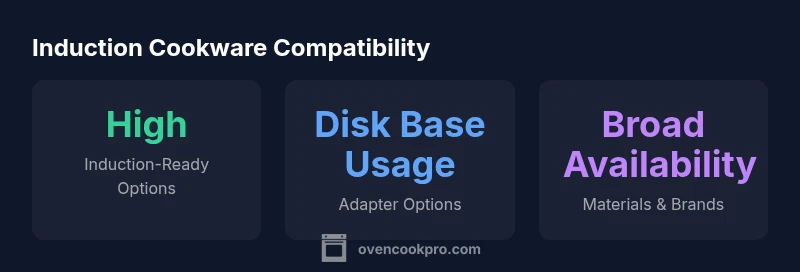
Two common base designs define how well a pan performs on induction: full bottom (solid, flat base) and disk-assisted bases. Full bottoms maximize surface contact and heat distribution, especially for simmering and braising. Disk-based solutions are useful for adapting nonmagnetic metals, such as certain aluminum or copper pans, by adding a ferromagnetic layer at the base. When shopping, check the base thickness and ensure the disk or core is well bonded to the outer shell; a loose disk can degrade heating performance. If you already own nonmagnetic pans, a magnetic disk insert can convert them to induction-ready pieces without a full replacement.
Size, Weight, and Handle Design
Induction cookware should be chosen with practical weight and ergonomic handles in mind. Heavy cast iron provides excellent heat retention but can be cumbersome; consider a lighter magnetic stainless steel option if you cook for long periods or have limited storage space. Ensure handles stay cool during use and are securely riveted to avoid wobble. For lids, choose snug-fitting glass or metal options that seal well without trapping excessive steam. The right mix of size and weight improves control, reduces fatigue, and minimizes heat loss during transfer between the hob and oven.
Practical Shopping Checklist
- Confirm induction compatibility via labeling or a magnetic test.
- Prioritize flat, even bases with adequate base thickness.
- Prefer ferromagnetic materials: cast iron or magnetic stainless steel as a baseline.
- For nonmagnetic metals, consider a magnetic disk base to enable induction heating.
- Check for durable exterior finishes and dishwasher compatibility where relevant.
- Consider set flexibility: a mix of skillets, saucepans, and a stock pot for diverse tasks.
- Inspect lids and handles for safe, comfortable use and heat resistance.
Care and Maintenance for Longevity
Season cast iron where appropriate to maintain nonstick characteristics, and hand wash delicate nonstick coatings to preserve their performance. Dry all parts promptly to prevent rust on cast iron and water spots on stainless steel. Avoid harsh abrasives that can scratch protective coatings. Regularly inspect the base for warping or loose components. When properly cared for, induction-ready cookware delivers consistent results for years and maintains its value for future kitchen upgrades.
Testing and Verification at Home
A simple magnet test can quickly verify induction compatibility: if a magnet sticks to the base, the pan is compatible. For pans with mixed materials, perform a quick heat test on low to medium heat and observe whether heat distributes evenly with minimal resistance. Check for any unusual hot spots and adjust cooking technique accordingly. If in doubt, consult your cookware manual or the manufacturer’s website for specific induction compatibility notes.
Troubleshooting Common Induction Cookware Issues
If a pan seems slow to heat, verify the base is clean and free of debris, and ensure it sits flat on the hob. Warped bases can hinder heat transfer, while poorly matched disk bases may cause uneven heating. When a nonmagnetic pan doesn’t heat at all, add or replace the magnetic disk or choose a proven induction-compatible alternative. For sticky residues, use nonabrasive cleaners to protect coatings.
Putting It All Together: Quick Purchase Guide
Aim for a balanced set with a reliable induction-compatible core, flat bases, and comfortable handles. If you own nonmagnetic cookware, add a magnetic disk adapter to convert some pieces without full replacement. Always cross-check labels and reviews to confirm induction performance before purchase. By choosing thoughtfully, you’ll enjoy faster, more even cooking and extend the life of your cookware collection.
Induction compatibility by material and base design
| Material Type | Induction Compatibility | Best Use | Notes |
|---|---|---|---|
| Cast iron | Yes | General cooking, heat retention | Typically magnetic and very durable |
| Magnetic stainless steel | Yes | Everyday cooking | Base must be magnetic and flat for best results |
| Aluminum (non-magnetic) | No | With magnetic disk base | Disk converts for induction heating |
| Copper (non-magnetic) | No | With magnetic disk base | Excellent heat control when adapted |
Questions & Answers
What makes cookware induction-ready?
Induction-ready cookware must be magnetic and have a flat, stable base. A magnet test is a quick way to verify compatibility. Materials like cast iron and magnetic stainless steel generally perform well, while nonmagnetic metals may require a disk base.
Induction-ready cookware needs a magnetic base and a flat bottom. Do a quick magnet test to check compatibility.
Can aluminum pans work on induction?
Yes, aluminum can work on induction if the base includes a magnetic disk or a ferrous layer. Always confirm induction compatibility on the packaging or with the manufacturer.
Aluminum can work if it has a magnetic base or disk; check the label.
Disk for non-magnetic metals?
A magnetic disk base can convert non-magnetic metals like aluminum or copper into induction-ready cookware. Ensure the disk is properly bonded and sized for the pan.
A magnetic disk can make non-magnetic pans induction-friendly.
How can I test cookware at home?
Use a simple magnet test first. Then heat on low to medium power and observe for even heating and absence of hot spots. Consult the manufacturer if in doubt.
Test with a magnet, then heat on low to check evenness.
Is cast iron safe on induction?
Yes, cast iron is inherently induction-friendly and heats evenly, though it’s heavy. Ensure the base is flat for best results.
Cast iron works great on induction; just make sure the base is flat.
How should I care for induction cookware?
Follow manufacturer care instructions. Hand wash nonstick coatings, dry promptly, and season cast iron as needed. Inspect for warping and avoid harsh abrasives.
Follow care instructions, hand wash when needed, and dry thoroughly.
“Induction-ready cookware isn’t just about magnetism; bottom flatness and consistent base design matter as much as material choice.”
Main Points
- Check cookware is induction-compatible before buying
- Prioritize flat, thick bases for even heating
- Use magnetic disks to adapt nonmagnetic metals
- Care and maintenance extend lifespan of induction cookware