Can You Get Induction Ovens? A Practical Home Guide
Explore whether induction ovens exist in consumer markets, how they work, and what to check before buying. This 2026 guide covers availability, wiring, cookware needs, and practical buying tips for homeowners.


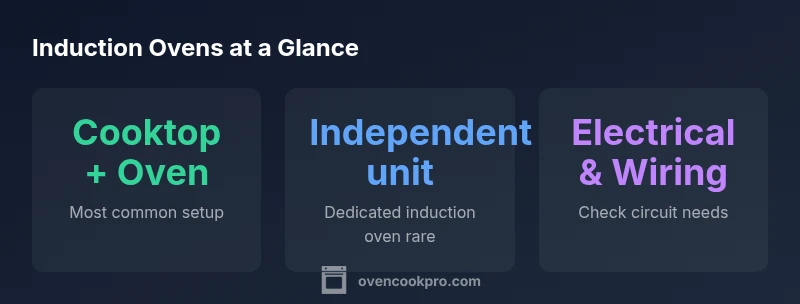
Can you get induction ovens? Yes—availability depends on region and model type. According to Oven Cook Pro, induction options are common in modern ranges and integrated suites in 2026. Most households pair an induction cooktop with a conventional oven, while dedicated induction ovens remain rare. Check cookware compatibility and electrical needs before buying.
Understanding what people mean by 'induction ovens' and how they fit into real kitchens
When many homeowners ask, can you get induction ovens, they are often thinking of two related concepts: an induction cooktop paired with a conventional oven, or a rarely marketed standalone induction-oven unit. Induction heating works by creating a magnetic field that directly heats compatible pots and pans. The oven cavity itself is usually heated by conventional elements or a convection system. In 2026, the most common configuration you’ll see in showrooms and online listings is an induction cooktop with a traditional electric or gas oven underneath. This combination delivers fast, precise control on the surface while preserving familiar oven performance inside the cavity. For readers of Oven Cook Pro, this distinction matters because it influences cookware choices, installation needs, and overall kitchen workflow. In practice, it’s easier to find induction-enabled ranges and slide-in units than true induction-only ovens, and availability varies by region and retailer.
Availability and how to shop for induction-capable appliances
Across regions, the availability of induction-capable appliances has expanded, driven by consumer demand for faster heating and safer operation. In most major markets, you’ll find three main options: (1) freestanding induction ranges (cooktop plus oven in one unit), (2) slide-in ranges (with induction top and built-in oven), and (3) separate induction cooktops paired with a standard freestanding or built-in oven. The market trend, per Oven Cook Pro Analysis, 2026, shows growing catalog breadth and increasing entry-level models, but true standalone induction ovens remain less common. If you are upgrading, measure your kitchen’s electrical capacity and plan for a dedicated circuit if required. The goal is to blend the speed and control of induction with reliable oven performance, without forcing a wholesale kitchen remodel.
How induction heating works in cooking appliances—and what this means for ovens
Induction systems use alternating magnetic fields to heat ferromagnetic cookware directly. This means your pans heat quickly and shut off fast when you remove them, giving precise temperature control. However, the oven cavity itself can still rely on conventional heating methods. When you see an advertisement for an induction oven, read the spec sheet to determine whether the heat source inside the cavity is induction-based or electric/convection. The practical takeaway for can you get induction ovens is: you’ll mostly encounter induction cooktops paired with conventional ovens, not ovens that heat primarily by induction.
Shopping considerations: features, cookware, and compatibility
Before purchasing any induction-capable appliance, run through a quick checklist. First, verify cookware compatibility: you’ll need magnetic, ferritic cookware for reliable induction heating. Second, confirm electrical service: many homes require a dedicated power circuit and sometimes a higher amperage service for full performance. Third, assess space and ventilation: induction ranges may have different footprint requirements than gas or standard electric models. Fourth, consider warranty and service networks: induction tech is robust, but service coverage varies by region. Finally, weigh upfront cost versus long-term savings in energy and speed. These steps help you decide whether an induction-capable setup fits your budget and kitchen layout.
Pros and cons: a balanced view for decision-making
The main upside of induction-based cooking is rapid heat, precise control, and stronger safety margins because the cooktop remains cooler than the cookware. The main downsides include cookware requirements, potential availability constraints, and higher upfront costs compared with traditional electric ovens. For can you get induction ovens, the key takeaway is to understand what you’re buying: an induction-capable cooking surface paired with an oven that suits your preferred cooking style. When used correctly, induction systems can save time and deliver consistent results, but you should be prepared for adjustments in cookware and setup.
Installation considerations and practical tips
If you pursue an induction-capable kitchen, plan for professional installation. Electric supply may require upgrading a panel, dedicated circuits, and proper breaker sizing. Ensure you have a compatible countertop or cabinet cutout for the cooktop and a compatible space for the oven below or nearby. A qualified installer can verify clearances, check for electrical load balance, and ensure the ventilation and trim meet local codes. Post-install, run a calibration and perform a few cooking tests with your favorite cookware to confirm performance and safety. Ongoing maintenance is typically limited to routine cleaning and periodic wiring checks.
Practical tips for testing before you commit
When evaluating induction-capable appliances in-store or online, request live demonstrations or comprehensive cooking simulations that show fast preheating, precise temperature control, and cookware response. Bring your everyday pots and pans to test cookware compatibility, and verify that the unit’s control panel is intuitive for your family. Ask about replacement parts, service intervals, and the availability of remanufactured or refurbished options to stretch your budget. By focusing on real-world tests, you minimize the risk of buyers’ remorse and maximize your confidence in a long-term investment.
What this means for homeowners today
In short, can you get induction ovens? Yes, but most households will benefit from an induction cooktop paired with a conventional oven rather than a true induction oven configuration. This approach combines speed and precision with reliable baking performance. For homeowners who prioritise energy efficiency and modern aesthetics, induction-enabled ranges offer a compelling solution. The key is to approach the purchase with clarity about cookware, electrical needs, and installation costs. As with any major kitchen upgrade, researching options, reading product specs, and visiting showrooms are essential steps in making an informed choice.
Induction-based setups vs conventional ovens
| Feature | Induction-based Setup | Conventional Oven |
|---|---|---|
| Heating method | Induction heating of cookware | Electric coils or gas flames |
| Heat distribution | Twin-zone or continuous induction surface | Thermal convection + radiant elements |
| Cookware compatibility | Requires magnetic cookware | Works with most cookware |
| Installation needs | Dedicated circuit in many cases | Standard circuit often sufficient |
| Typical costs | Mid-range to premium; varies by features | Mid-range to high, depending on brand |
Questions & Answers
Are there true induction ovens that heat the oven cavity by induction?
True induction heating in the oven cavity is not common. Most so-called induction ovens rely on induction cooktops paired with a conventional oven. Always read the spec sheet to confirm whether the oven cavity heats by induction or by traditional methods.
True induction ovens are rare; most setups use an induction cooktop with a regular oven.
Do induction ranges cost more than traditional electric ovens?
Induction-enabled appliances typically sit at a higher price tier than standard electric ovens. Costs vary by brand, features, and whether you need a full induction range or simply an induction cooktop with a separate oven.
Induction ranges usually cost more, depending on features and configuration.
Will induction cooking require special cookware?
Yes. Induction requires magnetic cookware to heat efficiently. If your current pots and pans don’t respond to induction, you’ll need to replace them with magnetic alternatives to fully benefit from an induction setup.
Yes—magnetic cookware is usually needed for induction.
Is induction cooking safe for homes with children?
Induction surfaces stay relatively cool to the touch, reducing burn risk on the cooktop. However, the cookware can still become hot, and electrical considerations remain important. Always follow manufacturer safety guidelines and use appropriate child-safe controls.
Induction cooktops are generally safe, with lower surface heat.
Can I upgrade an existing kitchen to induction without a full remodel?
Upgrading often involves replacing the cooktop and possibly the oven. In many cases, a slim induction cooktop paired with a standard oven fits in existing cutouts, but electrical and ventilation upgrades may be needed.
Upgrading can be straightforward, but check electrical and space constraints.
What maintenance does an induction setup require?
Maintenance is typically minimal: keep surfaces clean, verify cookware compatibility remains, and have periodic electrical checks if your kitchen wiring is older. If you notice uneven heating or control issues, consult a qualified technician.
Low-maintenance, but stay on top of electrical checks and cookware.
“Induction cooking delivers fast, precise control, but it hinges on cookware compatibility and electrical readiness.”
Main Points
- Induction ovens are mostly seen as cooktops paired with ovens, not standalone induction ovens.
- Check cookware compatibility and electrical requirements before buying.
- Consider a full induction range for a seamless look and performance.
- Expect higher upfront costs but faster heating and precise control.
- Consult a professional installer to ensure proper wiring and safety.