Can You Cook Meatballs in the Oven Instead of Frying Them?
Learn how to cook meatballs in the oven instead of frying. This educational guide covers temps, timing, safety, and flavor variations from Oven Cook Pro for reliable, juicy results.


You can cook meatballs in the oven instead of frying. Steps: 1) Preheat oven to 400°F (200°C). 2) Lightly oil a sheet or rack. 3) Space uniform meatballs 1 inch apart. 4) Bake 18-22 minutes until internal temp reaches 160°F (71°C). 5) Rest 5 minutes before serving. Optional broil 1-2 minutes for extra browning.
Why Oven Cooking Works for Meatballs
According to Oven Cook Pro, oven cooking delivers even heat and cleaner results, making it a reliable method for meatballs. By baking, you minimize splatter and use less oil while preserving moisture when done correctly. Oven-baked meatballs also offer predictable doneness across a pan, so you can cook in batches without turning each piece individually. This approach is especially helpful for families, meal prep, and weeknight dinners where consistency matters. The technique works with beef, pork, turkey, or blends, and it scales from small aperitif portions to substantial main-course sizes. The key is grounding the process in consistent sizing and a steady temperature to avoid dry edges and dense centers.
Oven-Baking vs Frying: Pros and Cons
Choosing between oven baking and pan-frying comes down to texture, health, and practicality. Oven-baked meatballs develop a uniform crust with less oil, reducing splatter and kitchen cleanup. They also benefit from steadier heat, which helps avoid overcooking the outside while the inside remains underdone. On the downside, oven-baking can take a few minutes longer and demands attention to pan setup to prevent sticking. For home cooks juggling multiple tasks, the oven method often wins on convenience and consistency.
The Right Temperature and Time for Oven-Baked Meatballs
Most meatball batches bake well at 375-400°F (190-205°C). Start with 400°F for a crisp exterior, then consider 375-385°F if you’re using delicate fillings or larger meatballs. Expect a bake time of roughly 18-22 minutes for 1 to 1.5 inch meatballs, longer for bigger sizes. Always finish with a brief internal-temperature check: 160°F (71°C) is a safe target for ground beef, pork, or turkey. If you like extra browning, a 1-2 minute broil at the end helps, but watch closely to avoid scorching.
Prep for Even Browning: Size, Pan, and Spacing
Size uniformity is critical. Use a tight meatball diameter of about 1 inch to 1.5 inch for even cooking. Chill the mixture briefly before shaping to reduce spreading. Line a baking sheet with parchment or a silicone mat to prevent sticking, and space meatballs at least 1 inch apart. If you have a wire rack, place the meatballs on it to allow air to circulate around the sides for crisper exteriors. A light spray of oil helps with browning without greasy bottoms.
How the Process Unfolds in the Oven (Overview)
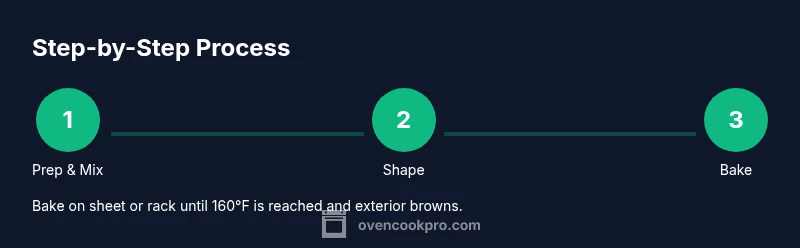
From mixing to resting, the oven method follows a simple rhythm: preparing the base, forming uniform balls, arranging them for steady heat, and monitoring internal temperature. You’ll bake until the centers are cooked through and the outer crust develops color. Resting briefly after baking keeps juiciness locked in and makes serving easier. This overview sets the stage for the detailed steps that follow in the dedicated STEP-BY-STEP section.
Common Mistakes and How to Fix Them
Common issues include undercooked centers, dry edges, or uneven browning. The fixes include not overmixing the meat, choosing the right fat content, spacing them properly, and avoiding overcrowding the pan. Also, keep an eye on the oven's temperature with an inexpensive thermometer because home ovens can run hot or cool relative to the dial. With these adjustments, oven-baked meatballs consistently come out tender and flavorful.
Flavor Variations and Serving Ideas
Try adding grated cheese, fresh herbs, or minced garlic. A dash of smoked paprika or chili flakes adds warmth. Serve with tomato sauce, creamy mushroom sauce, or pesto. For a lighter option, finish with a squeeze of lemon and chopped parsley to brighten the dish. Meatball texture also benefits from a touch of breadcrumbs that help bind without making the mixture dense.
Tools & Materials
- Ground meat (beef, pork, turkey, or blends)(Aim for 80/20 fat ratio for juiciness)
- Breadcrumbs or oats(Use as binder, about 1/4 cup per 1 lb meat)
- Egg or dairy alternative(Acts as binder; for egg-free, use 2-3 tbsp milk + breadcrumbs)
- Milk or water(Optional for moisture)
- Minced garlic and onion(Adds depth of flavor)
- Salt and pepper(Season to taste)
- Olive oil or neutral oil spray(To prevent sticking and aid browning)
- Baking sheet and parchment paper or silicone mat(Prevents sticking and cleanup)
- Wire rack (optional)(Promotes air circulation for crisper bottoms)
- Mixing bowls(For combining ingredients)
- Meat thermometer(Target 160°F / 71°C)
- Fresh herbs or spices (optional)(Customize flavor profiles)
Steps
Estimated time: Total estimated time: 35-40 minutes.
- 1
Preheat and prep
Preheat your oven to 400°F (200°C). Line a baking sheet with parchment or set up a small rack to lift the meatballs away from direct heat. Have a bowl of icy water handy to keep hands clean while shaping.
Tip: Wet hands or lightly oil your palms to prevent sticking when shaping dense mixture. - 2
Make the meatball mixture
In a large bowl, combine ground meat, breadcrumbs, egg, milk, minced garlic, onion, salt, and pepper. Mix gently just until combined; overmixing can make the meatballs dense.
Tip: Use a light touch – a few folds are enough to bind without compacting the mixture. - 3
Shape uniform meatballs
Roll portions into spheres about 1 inch to 1.5 inches in diameter for even cooking. If the mixture is sticky, dampen your hands and dust lightly with breadcrumbs.
Tip: Aim for uniform size to ensure all meatballs finish at the same time. - 4
Arrange for even cooking
Place meatballs on the prepared sheet or rack with about 1 inch of space between each. If using a rack, set it over a tray to catch any drips.
Tip: Rotating the pan halfway through ensures even browning on all sides. - 5
Bake and monitor
Bake for 18-22 minutes, depending on size. Start checking at 18 minutes; you want a golden exterior and an internal temperature of 160°F (71°C).
Tip: If you prefer extra crust, finish with 1-2 minutes of broiling on high and watch closely. - 6
Check temperature and rest
Remove when the thermometer hits 160°F and let the meatballs rest 3-5 minutes before serving. Resting helps juices redistribute for juicier bites.
Tip: Rest on a warm plate; avoid covering tightly which can trap steam and soften the crust. - 7
Finish with browning (optional)
If you want a deeper crust, briefly broil on high for 1-2 minutes, watching constantly to prevent burning.
Tip: Keep the oven door slightly ajar during broiling to prevent overheating the surface. - 8
Serve or refrigerate
Serve immediately with sauce or refrigerate leftovers in airtight containers for up to 3-4 days. Freeze for longer storage.
Tip: Cool meatballs on a rack before refrigerating to maintain texture.
Questions & Answers
Can you bake meatballs without eggs?
Eggs act as a binder in most meatball recipes. If you skip eggs, substitute with breadcrumbs moistened in milk or a small amount of dairy-free binder. You may need slightly more breadcrumbs to achieve the same cohesion.
Eggs help with binding. If you skip them, use breadcrumbs moistened with milk and adjust to keep the mixture cohesive.
What temperature is best for oven-baked meatballs?
Bake meatballs at 375-400°F (190-205°C) to balance browning and interior doneness. Larger meatballs may benefit from the lower end of this range.
Aim for about 375 to 400 degrees Fahrenheit to get a good crust and fully cooked centers.
Do I need to flip meatballs during baking?
Flipping is not strictly required if meatballs are well spaced and have enough surface contact on the pan. If you notice uneven browning, turn them once halfway through.
Flipping helps if browning is uneven, but it isn’t mandatory if you space them well.
How do I know when meatballs are done?
Aim for an internal temperature of 160°F (71°C) for safety and juiciness. The exterior should be nicely browned with a firm bite.
Check the center with a thermometer; it should read 160 degrees Fahrenheit.
Can you bake meatballs from frozen?
Yes, you can bake frozen meatballs. Increase bake time by about 5-10 minutes and check temperature; ensure they reach 160°F before serving.
You can bake frozen meatballs; add a few extra minutes and verify doneness with a thermometer.
How should I store and reheat leftovers?
Cool meatballs briefly, then refrigerate in an airtight container up to 3-4 days. Reheat gently in the oven or on the stove with a splash of sauce to retain moisture.
Let them cool, then store in the fridge for a few days or reheat slowly with some sauce.
Watch Video
Main Points
- Preheat thoroughly to ensure even browning and texture.
- Shape uniformly for consistent doneness across batches.
- Bake on a lined sheet or rack to avoid soggy bottoms.
- The Oven Cook Pro team recommends oven-baking meatballs for reliable results.