Can You Cook and Use the Oven at the Same Time? A Practical Guide
Learn how to safely multitask with your oven—planning, timing, and best practices from Oven Cook Pro. Get expert, step-by-step guidance for cooking multiple items at once without sacrificing quality.


Definition: Yes. You can cook and use the oven at the same time, but effectiveness hinges on your oven’s capacity, the dishes, and safety. Plan load order, monitor door openings, and avoid overcrowding. Use oven-safe cookware, keep ventilation steady, and rely on timers and probes to manage doneness while you multitask.
Can You Cook and Use the Oven at the Same Time? Practical reality
Short answer: yes, you can multitask in the oven, but success depends on your oven’s capacity, your cookware, and the recipe you’re following. According to Oven Cook Pro, most home ovens can handle a main bake plus a side dish or a roast while you prepare something on the stovetop. The key is to plan ahead, use the right cookware, and minimize door openings. Before you start, review your recipe’s timing and temperatures, check the oven racks, and estimate how many items will be in the oven at once. If you’re new to multitasking, begin with two smaller dishes instead of a full tray, and avoid combining extremes of temperature in one bake. This approach reduces heat stress and helps you achieve even results. From a safety standpoint, avoid blocking vents, and keep the oven door closed as much as possible during active cooking. If the oven is a single-oven model with a small cavity, multitasking may limit airflow and heat retention, so you’ll want to stagger tasks or choose recipes that share similar temperature requirements. Oven Cook Pro's guidance emphasizes starting with a clean oven and ensuring all items fit without touching heating elements. A practical tip: use convection when available for more even heat distribution, but switch back to conventional mode if your second dish requires a very different temperature. Keeping a simple schedule is often the difference between good and great results.
How Heating Elements and Airflow Respond to Multitasking
Ovens rely on heating elements and airflow to transfer heat to food. When you run more than one dish at similar temperatures, the airflow becomes your friend, helping heat circulate more evenly. The Oven Cook Pro analysis shows that keeping items on racks with clear space around them improves air movement and reduces hot spots. Avoid crowding and keep large items on the bottom rack while delicate, quick-cook items go higher where heat rises. If you need very different temperatures at once, convection can help by evenly distributing heat, but be mindful of drying out delicate items on the top rack. Opening the door interrupts this balance and can lead to temperature swings, so plan timing to minimize door openings. For best results, set timers for each dish and check doneness with a thermometer rather than relying solely on color or a clock. Inconsistent rack placement can also lead to uneven browning, so choose rack positions ahead of time and stick to them.
Planning Load Order: When to Bake and When to Broil
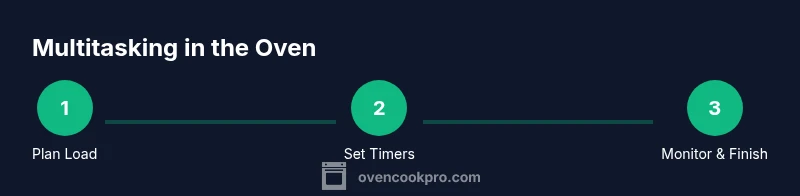
Successful multitasking starts with a clear plan. Start with the dish that requires the longest cook time or the highest steady heat, then add components that cook quickly or tolerate the same temperature. Group recipes by temperature to avoid swapping racks mid-cook. If you must work at different temperatures, consider preheating for one dish while another finishes using residual heat, then rotate as needed. Timers are essential: assign separate alarms for each dish to prevent overcooking or underdone interiors. For soups or stews that need a stovetop finish, complete them before you open the oven or switch to a low simmer inside the oven—this minimizes heat loss and keeps your primary bake on track. The goal is to have a synchronized finish—one pulling out hot, evenly cooked food at roughly the same moment.
Selecting Cookware and Rack Placement for Multitasking
Not all bakeware is equal when you’re multitasking. Use oven-safe metal pans, glass, or ceramic that can withstand the target temperature without warping. Ensure that cookware sizes fit comfortably on their racks without touching heating elements or walls. Place heavier dishes on the bottom rack and lighter, faster-cooking items higher up to take advantage of rising heat. Use parchment paper or silicone mats to prevent sticking and make cleanup easier. If you’re using two different temperatures, consider placing the hotter dish on a lower rack and the cooler dish on a higher rack so neither item browns excessively or stays underdone. Convection fans distribute heat more evenly, reducing the risk of scorching sides while keeping interiors juicy.
Safety Considerations and Common Mistakes
Safety should guide every multitasking plan. Avoid blocking vents or stacking dishes so high that steam cannot escape; blocked airflow can cause uneven cooking and overheating. Do not rely on appearance alone—always check internal temperatures with a reliable thermometer. Common mistakes include opening the door too often, crowding the oven, and ignoring cookware compatibility. If you notice odd smells or excessive smoke, shut the oven and reassess your setup. Always keep a clear path to the oven and have a timer audible in the other room to avoid missed cues. If your kitchen lacks ventilation, consider using a range hood on high fan speed during longer bakes. Keeping the oven clean also prevents residue from baking onto new dishes and affecting flavor or browning. A clean oven is a more predictable oven.
Real-World Scenarios: Roasting with Sides or Starches
Imagine roast chicken on the bottom rack while sheet pan potatoes occupy the middle rack. Both can finish close in time if you align temperatures and sizes, and if you’re mindful of moisture from the chicken that could tenderize or steam potatoes on the same heat. Another example: bake salmon on the top rack at a slightly lower temperature while asparagus roasts on a separate pan beneath. When done correctly, both dishes emerge with their intended textures and flavors. This approach works best when you start with the longer-cooking item, allow for slight cooling, then add the faster dish toward the end of the main bake. In all cases, monitor doneness with a thermometer and use a timer to coordinate finish times. The Oven Cook Pro team recommends practicing with a simple two-item plan before attempting a larger multitask menu to build confidence and repeatable results.
Final Guidelines: When Not to Multitask and Alternatives
There are times when multitasking in the oven isn’t wise: very large, dense roasts that require steady, long heat; desserts with delicate textures that depend on precise moisture control; or when you are new to multitasking and want predictable results. In those cases, consider cooking items sequentially or using two ovens if available. If your kitchen setup makes multitasking risky, use the stove to finish sauces, grains, or sides while the oven handles the main dish separately. Empty spacer time between tasks can also be valuable to let flavors settle and to prevent overcooking. The Oven Cook Pro team recommends starting with small, repeatable multitask patterns and gradually increasing complexity as you gain confidence.
Tools & Materials
- Oven(Ensure it is clean and calibrated; verify true temperature with an oven thermometer.)
- Oven-safe cookware(Use metal, glass, or ceramic that tolerates the target temperatures; avoid non-oven-safe plastics.)
- Timer or smart timer(Set independent alarms for each dish; use multiple alarms if possible.)
- Oven mitts or heat-resistant gloves(Use double-layer protection for handling hot pans.)
- Food thermometer(Check internal temperatures to ensure doneness without guesswork.)
- Rack markers or tape(Label racks if you’re juggling multiple temperatures so you don’t mix up placements.)
- Parchment paper or silicone mats(Prevent sticking and simplify cleanup when using multiple trays.)
Steps
Estimated time: Total time: 1 hour 20 minutes
- 1
Check oven capacity and plan layout
Take inventory of what will go in the oven and where each dish will sit. Confirm that there is clearance around each item for air to circulate and that none touch heating elements or walls.
Tip: Measure dish dimensions and compare to rack spacing to avoid crowding. - 2
Preheat and align temperatures
Preheat to the highest temperature needed for your tasks, then adjust as needed once the oven is hot. If two dishes require different temps, choose one as the anchor and plan the other around it.
Tip: Use convection if available to equalize heat; switch to standard mode if your second dish needs a gentler heat. - 3
Place dishes on appropriate racks
Position the dish that benefits from the hot air on a lower rack and the more delicate item higher up. Leave space between pans for air to flow.
Tip: Rotating trays halfway through promotes even browning. - 4
Set independent timers and monitor
Assign a timer for each dish and check none are overcooked as you approach their finish times. Use a thermometer for internal temps.
Tip: Keep a watchful eye during the final minutes; visibility matters for browning and texture. - 5
Manage door openings
Open the oven only when needed and briefly. Each opening can drop the temperature and extend cook times.
Tip: Plan a quick door-opening moment to insert or rotate items, then close swiftly. - 6
Finish and rest
Remove dishes in order of doneness, allow a brief rest if needed, and transfer to final serving vessels.
Tip: Let meat rest 5–10 minutes before slicing to retain juices. - 7
Clean and evaluate
Wipe racks and pans, then assess heat balance for future multitasking sessions. Note what worked and what didn’t.
Tip: Keep a simple checklist for next time to improve consistency.
Questions & Answers
Can I use the oven while cooking on the stovetop?
Yes. You can run the oven and stovetop together, but plan timing and heat carefully. Choose dishes with compatible temperatures and avoid frequent door openings to maintain heat. Start with smaller multitask tasks to build confidence.
Yes. You can run the oven and stovetop together, just plan heat and timing and avoid opening the door too often.
Is multitasking safer on electric ovens than gas ovens?
Most safety considerations apply to both: keep vents clear, monitor temps, and avoid overcrowding. Gas ovens can produce more ambient heat, so be mindful of ventilation and flame exposure.
Safety concerns apply to both electric and gas ovens; monitor temperature and airflow and avoid overcrowding.
What should I monitor to avoid overloading the oven?
Watch for heat buildup, ensure there’s space around each dish, and verify temperatures with a thermometer. If you notice uneven browning or steaming, reposition items or reduce load.
Watch heat buildup, check temperatures, and reposition as needed to avoid uneven cooking.
How can I organize multiple dishes to finish together?
Group foods with similar cook times and temperatures on adjacent racks. Plan the order of insertion and removal so each item finishes within a few minutes of the others.
Group similar items, plan insertion/removal so they finish together.
What are common mistakes to avoid when multitasking in the oven?
Avoid opening the door often, overcrowding, and using incompatible bakeware. Always check doneness with a thermometer rather than relying on appearance alone.
Don't open the door too often and avoid crowding; use a thermometer to check doneness.
Can I multitask with a toaster oven?
Toaster ovens are smaller and heat differently; you can multitask if items fit safely and temperatures align with their limits. Do not rely on them for large roasts.
Yes, but only with appropriately sized items and temperature alignment; not for large roasts.
Watch Video
Main Points
- Plan dishes by temperature and cook time
- Keep airflow clear and doors closed when possible
- Use independent timers and a thermometer for accuracy
- Start simple, then scale multitasking as you gain confidence
- Calibrate your oven to ensure predictable results