Can Oven-Ready Lasagna Be Boiled? A Practical Guide
Discover if you can boil oven-ready lasagna sheets, how it affects texture, and the best steps to prepare a delicious bake with confidence.


Yes, you can boil oven-ready lasagna sheets, but it isn’t the typical method. Boiling can hydrate the pasta and speed doneness, yet it may alter texture, making edges softer or edges rubbery if overdone. If you choose this route, keep the boil brief (a minute or two) and use a wide, well-salted pot, then proceed with layering and baking as you normally would.
Understanding oven-ready lasagna and the purpose of boiling
Can oven-ready lasagna be boiled? It’s a common question for home cooks who want reliable results without extra steps. Oven-ready sheets are designed to hydrate in sauce inside a hot oven, not in boiling water. Boiling is possible, but it isn’t the standard method for most no-boil lasagna products. The decision hinges on the pasta thickness, your timeline, and the sauce’s moisture. According to Oven Cook Pro, many no-boil varieties exist precisely to streamline weeknight meals, yet some cooks still experiment with a brief boil to ensure doneness when the sauce is thin or the oven is crowded. If you choose to boil, you’ll want to control the heat and keep the sheets separate to avoid tearing. This guide walks you through when boiling might help, how to do it safely, and how to bake to finish with a cohesive, saucy bake.
In practice, the goal is to hydrate the sheets evenly without turning the pasta into mush. The surface starch will release into the water, which can create a starchy foam if the water boils vigorously. A gentler boil and careful handling are key. You’ll also want to consider the sauce you’re using: a wetter sauce can compensate for pasta that has been boiled, while a very thick sauce might not provide enough moisture for properly hydrated sheets. Keeping your expectations aligned with the pasta type and sauce will help you land a well-balanced lasagna.
Can you boil oven-ready lasagna sheets? Pros and cons
Boiling oven-ready lasagna sheets is a technique with clear pros and cons. Pros include faster hydration when you’re short on time, and a higher likelihood that each sheet reaches a consistent tenderness if your oven runs cool or the sauce is thinner than usual. It can also help prevent “crunchy” edges in very dry sauces. On the downside, boiling can compromise texture, making sheets feel mushy or too soft around the edges, especially if you don’t monitor timing. There’s also a risk of tearing the sheets during handling, and some manufacturers advise against boiling their oven-ready products because it defeats their designed cooking method. In contrast, the no-boil approach relies on the sauce to hydrate the sheets during baking, producing a firmer bite. Oven Cook Pro analysis notes that there isn’t a universal rule; outcomes depend on brand, sheet thickness, and sauce moisture. If you do boil, plan for a shorter bake afterward to avoid overcooking the pasta, and test a sheet first to gauge texture before committing a full pan.
If you’re aiming for control over doneness, boiling can be a useful pre-step. If you want maximum reliability with minimal risk of texture changes, stick to no-boil methods and rely on the sauce to hydrate the pasta. Either way, the final bake remains crucial for melding flavors and achieving a cohesive dish.
How to boil oven-ready lasagna sheets (when you choose this method)
If you decide to boil, follow a controlled, careful approach to minimize texture issues and maintain sheet integrity. Start with a large, wide pot to give each sheet ample room. Bring salted water to a rolling boil, then slip the sheets in one at a time with tongs, keeping them flat and separated. Boil for a brief time—usually 1–2 minutes for standard thickness, slightly longer for thicker varieties. The goal is to hydrate without fully cooking the pasta. Lift sheets gently and drain them immediately into a colander. If you’re stacking sheets, lay them out flat on a clean towel to dry briefly and prevent sticking. Rinsing is optional; a light rinse can stop residual cooking but may remove surface starch that helps sauce cling. Pat sheets dry before layering to minimize moisture pooling in the pan.
Tip: Have your sauce ready and well-seasoned. A little extra sauce moisture can compensate for the pasta’s brief boil, preventing a dry final bake. If any sheets tear, set them aside and use them as interior layers where texture matters less, or tear them into uneven pieces to fit corners without affecting overall structure.
Finish cooking: baking after boiling for best texture
After boiling, you can proceed to bake as you would with no-boil sheets. The key is moisture management: keep a generous amount of sauce in the pan to rehydrate the pasta during the bake, and cover with foil to trap steam if you worry about drying out the edges. Bake at a moderate temperature until the sauce is bubbling, then remove the foil for the final minutes to help develop a light crust on top. Rest the lasagna after removing it from the oven—this helps the layers re-connect and makes slicing cleaner. If you notice overly soft edges, reduce the bake time slightly next go-round or add a final brief broil to finish with color and texture.
In relation to texture, boiling can make the inside layers more uniform, but the outer edges may become too soft if overdone. Layering technique matters: moisture from sauce should permeate the pasta without soaking the top layer to a soggy state. A well-balanced balance of pasta, sauce, and cheese will yield a harmonious bite across all layers.
Texture and compatibility: sauce, cheese, and starch interactions
Texture is the defining factor when debating whether to boil oven-ready lasagna sheets. Boiled sheets can accept sauce differently than no-boil sheets, sometimes absorbing more moisture and thinning the sauce’s viscosity near the pasta. This can be advantageous in very thick or rich sauces, where the pasta benefits from additional hydration. However, if you use very wet sauces with boiled sheets, you may end up with a looser, soupier bake rather than a cohesive lasagna. The starch released during boiling can help sauce cling to the sheet edges, but it can also contribute to a gummy mouthfeel if excessive. Cheese choice matters as well: a high-fat cheese can help seal in moisture, while mild ricotta or béchamel can balance a softer interior. As a general rule, pair boiling with a sauce that has enough body to support the layers, and consider testing a single sheet to gauge how your specific brand behaves before committing to a full tray.
Brand considerations also matter. The Oven Cook Pro team recommends reading packaging guidance for oven-ready sheets and experimenting with a small test pan to see how your brand responds to boiling in your kitchen environment. A few adjustments to moisture levels and bake time can yield a more consistent result across brands and batches.
No-boil option: how to decide which method to use
Choosing between boiling and no-boil comes down to time, texture preference, and the pasta’s thickness. No-boil sheets are designed to hydrate gradually in the oven, producing firmer texture and often less moisture loss during baking. No-boil is usually the simpler route and reduces the risk of a watery or unevenly cooked casserole. Boiling may be useful if you’re short on oven time, if your sauce is particularly thin, or if you want a specific texture profile that’s easier to control with a brief pre- hydration. It’s helpful to test both methods with your preferred brand and sauce to determine which approach yields the best overall lasagna in your kitchen. The Oven Cook Pro team encourages home cooks to document results and adjust next time accordingly, especially when cooking for guests or meal prep.
In all cases, accurate timing and careful handling are essential. If you’re new to lasagna or cooking with no-boil sheets, starting with the standard no-boil method may be advisable, then trying a boiled version on a small scale to understand the differences in texture and moisture absorption.
Troubleshooting and common mistakes
Even experienced cooks encounter issues when boiling oven-ready sheets. Common problems include torn sheets, overly soft edges, and a soggy final bake. To prevent tearing, handle sheets gently with tongs and avoid dropping them into water that’s boiling too vigorously. If sheets bake out of alignment or clump together, use a wider pot or introduce a gentle stir mid-boil to separate them. Moisture balance is another frequent pitfall: too much water can lead to soggy lasagna, while too little moisture can leave it dry in the center. If your sauce is too thin, consider reducing the amount of water you add to the filling slightly, or add an extra layer of cheese to seal in moisture. Finally, check doneness by using a knife or skewer to test the pasta in the center; if it’s tender through the middle, you’re likely ready for the final bake.
Quick-reference comparison: no-boil vs boil vs parboil
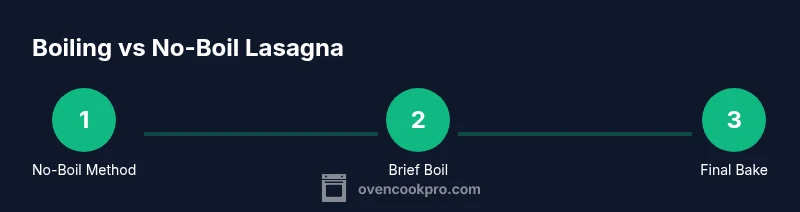
No-boil lasagna sheets hydrate entirely in the oven, delivering a consistent texture with potentially firmer edges. Boiling provides short-term hydration and can speed up doneness, but texture can vary more widely and tear risk is higher. Parboiling sits in between, softening sheets a touch without fully cooking them, then finishing in the oven with a sauce-rich bake. Your choice should consider brand instructions, sauce moisture, and the texture you and your guests prefer. A practical test pan using your preferred brand can help you settle on the best approach for family meals or entertaining.
Tools & Materials
- Large, wide pot (at least 6-8 quarts)(Provides ample space for pasta to move without sticking)
- Salt(Use about 1-2 tablespoons per gallon of water)
- Tongs(For safely dropping sheets and lifting them out)
- Colander(To drain sheets quickly and evenly)
- Slotted spoon or skimmer(Helpful for lifting sheets without tearing)
- Kitchen towel or parchment(Dry sheets briefly if stacking to prevent sticking)
Steps
Estimated time: 50-75 minutes
- 1
Decide on boiling vs no-boil
Review your lasagna recipe, sauce thickness, and brand guidance. If moisture is high and you’re short on oven time, boiling may help; otherwise, the no-boil method is typically more forgiving. Always test a small sheet first if you’re unsure.
Tip: Start with the boiling method on one sheet to gauge texture before committing the whole pan. - 2
Prepare a wide, salted pot of water
Fill a large pot with plenty of water and add salt. Bring to a brisk boil; you want active motion without overflowing when sheets are added.
Tip: Salt helps flavor and keeps pasta from sticking; use a generous pinch per liter of water. - 3
Boil the sheets briefly
Gently slide lasagna sheets into the boiling water one at a time. Maintain a gentle boil and cook for about 1–2 minutes, depending on thickness. Remove with tongs and drain immediately.
Tip: Do not overboil; you’re aiming for hydrated, pliable sheets, not fully cooked pasta. - 4
Cool and dry the sheets if stacking
Lightly cool the sheets on a towel or rack to prevent sticking. If you’re layering immediately, you can place the sheets directly into a colander and pat dry.
Tip: Dry sheets help prevent clumping in the pan and ensure even layering. - 5
Layer with sauce and cheese
Add a layer of sauce to the pan, lay down the sheets, then cover with sauce and cheese as you normally would. The moisture from the sauce will finish hydrating the pasta during the bake.
Tip: Keep sauce at a thickness that can cling to the pasta to prevent dry areas. - 6
Bake until bubbling and set
Cover and bake at a moderate oven until the lasagna is bubbling and the flavors meld. Rest before slicing to help the layers set.
Tip: Avoid overbaking; resting ensures cleaner slices and better portioning.
Questions & Answers
Is it necessary to boil oven-ready lasagna sheets?
No, it isn’t strictly necessary. Oven-ready sheets are designed to hydrate in the oven, but boiling is a viable option in some situations. Expect variations in texture depending on brand and sauce moisture.
No-boil is usually sufficient, but you can boil if you need faster hydration or a different texture.
Will boiling ruin flavor?
Boiling itself doesn’t ruin flavor; it can change texture and moisture. Pair boiling with a sauce that has enough body to rehydrate the pasta without becoming watery.
Boiling can change texture but flavors stay with your sauce and cheese.
How long should I boil oven-ready lasagna sheets?
Typically 1–2 minutes for standard sheets, slightly longer for thicker varieties. Always test one sheet first to determine tenderness.
Boil a sheet briefly and test before committing the whole pan.
Can I layer immediately after boiling?
Yes, you can layer immediately after draining and patting dry. If you need to cool sheets, lay them flat to prevent sticking.
You can layer right away after draining, just dry the sheets first.
What if the sheets tear during boiling?
Gently lift sheets with tongs, avoid forcing them apart, and place torn pieces toward the interior where texture matters less. You can use torn pieces as internal layers.
If a sheet tears, don’t panic—use the pieces where they won’t affect the bite.
Are there safer alternatives to boiling or no-boil?
Parboiling or a quick soak can be a middle ground, providing partial hydration without fully cooking the pasta. This reduces risk of overly soft edges while still saving time.
Parboiling or quick soak can give you a balance between texture and speed.
Watch Video
Main Points
- Choose boiling only if you need faster hydration or a different texture.
- No-boil remains the simplest, most forgiving method for layered lasagna.
- Moisture balance is critical; sauce should hydrate pasta without turning soggy.
- Handle sheets gently to avoid tearing during boiling and layering.
- Test with a small batch to identify brand-specific results.