Baking in Air Fryer: A Complete How-To Guide
Learn how to bake in an air fryer with expert guidance from Oven Cook Pro. This comprehensive guide covers preheating, temperatures, and tips for crisp, even results.


By the end, you’ll confidently bake a wide range of foods in your air fryer with reliable, crisp results. This guide covers preheating, selecting temperatures, proper load, and even timing for browning. You’ll follow a clear, step-by-step approach that minimizes sticking and uneven baking, helping you achieve bakery-like textures without deep frying.
Why baking in air fryer is popular
According to Oven Cook Pro, baking in air fryers combines speed and crispness with lower oil use, making it a versatile alternative to traditional ovens. Home cooks appreciate the convenience of batch-baking small portions. The technique hinges on rapid hot air circulating around the food, creating browning without deep frying. In practice, you’ll discover that many everyday staples—from vegetables to lean proteins—transform with a light crust and a juicy interior. This section also covers how air fryer baked goods compare to oven-baked items, highlighting time savings and the importance of preventing overcrowding for even browning. By embracing a systematic approach, you’ll expand your repertoire beyond reheating to true baking experiences.
How air fryer baking works
Air fryers use a high-power heating element and a compact, perforated basket to circulate hot air around food at high speeds. The result is quick moisture loss from the surface and rapid browning. Because air is the primary medium for heat transfer, items small enough to fit the basket bake more evenly. This section explores convection dynamics, Maillard browning, and how fan speed, wattage, and rack position influence texture. Understanding these principles helps you select recipes that scale well to air fryer capabilities and avoid soggy or overcooked results.
Preheating and temperature guidelines
Preheating isn’t always required, but it often yields more consistent browning and shorter total bake times. Start with a short preheat (2–5 minutes) at the recipe’s recommended temperature. For most baked goods and proteins, temperatures range from 320°F to 400°F (160°C to 205°C). Use a thermometer when possible to verify doneness, especially for thicker cuts. Remember that different models vary in heat distribution, so you may need to adjust by a few degrees in subsequent batches.
Pans, parchment, and prep for best results
To maximize airflow and browning, opt for shallow, nonstick pans or silicone bakeware that fits inside your basket. Perforated parchment sheets or parchment paper liners help prevent sticking while preserving airflow; avoid blocking vents. Lightly coat or oil your chosen container if muffins, cookies, or delicate items are involved. This section also covers when to flip or rotate items during the bake and how to arrange foods in a single layer for even heat exposure.
Flavor and texture: oil use and coatings
A little oil goes a long way in air fryer baking, supporting crisp edges without excessive fat. Light sprays or brushing with neutral oil can improve browning on vegetables, potatoes, and poultry. For breaded coatings, shake off excess flour or crumbs before baking to prevent sogginess. Dry rubs and sugar-based glazes require closer attention to avoid burning; start with shorter bake times and monitor closely as you gain experience.
Step-by-step example: bake vegetables in the air fryer
Imagine you’re baking small batches of mixed vegetables. Start by cutting veggies evenly, patting them dry, and tossing with a tablespoon of oil and a pinch of salt. Preheat to 400°F (205°C) for a few minutes, spread veggies in a single layer, and bake for 8–12 minutes, shaking halfway. Finish with a brief rest to let the surface crisp up. This narrative illustrates how batch size and spacing impact texture and color throughout the bake.
Troubleshooting and common mistakes
Common issues include overcrowding, uneven heat, and sticking. Overcrowding traps steam, leading to soggy surfaces; always leave air gaps. If browning is uneven, rotate the tray or shake the basket mid-bake. Use parchment liners to prevent sticking, but avoid heavily coated surfaces that burn. For soft interiors, reduce oil and shorten bake times while checking internal temperatures.
Safety and cleanup after air fryer baking
Handling a hot air fryer requires care. Always unplug and cool before cleaning, and wipe down the exterior with a damp cloth. Remove and wash the basket and tray after they cool, avoiding dishwasher cycles that can damage nonstick coatings. Regularly inspect the door seals and vents for grease buildup to maintain optimal airflow and performance.
Advanced tips for consistent results
Dial in your bake by documenting temperatures, times, and batch sizes for each recipe. Use a thermometer to verify internal temperatures for proteins, and experiment with rack positions to adjust browning. Keep a small library of reliable, 4–6 serving recipes with consistent outcomes to reduce guesswork. With practice, you’ll tailor your technique to your specific air fryer model.
Choosing the right foods to bake in an air fryer
Foods that cook quickly, don’t rely on heavy batter, and can fit in a single layer bake best in air fryers. Prioritize small to medium pieces and adjust time for thickness. Vegetables, lean proteins, and baked snacks commonly perform well; for baked goods, use appropriate bakeware and keep portions modest to ensure air circulation.
Tools & Materials
- Air fryer unit(Ensure the capacity fits your batch; preheat if your model supports it)
- Parchment paper liners (perforated)(Use to prevent sticking while allowing airflow)
- Oil spray or brush (neutral oil)(Lightly oil foods or bakeware for browning)
- Silicone brush(For applying oil/seasoning evenly)
- Tongs(For turning and checking doneness)
- Meat thermometer(Verify internal temperature for proteins)
- Silicone muffin cups or small silicone bakeware(Great for muffins or individual portions)
- Oven-safe rack or wire rack insert(Promotes airflow under items)
Steps
Estimated time: 25-45 minutes
- 1
Prepare ingredients and equipment
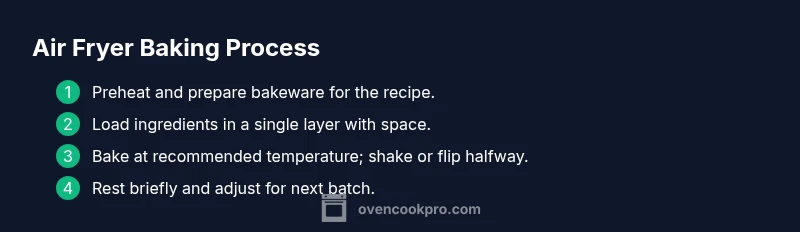
Gather all ingredients and your air fryer-friendly bakeware. Pat foods dry to encourage browning and prevent steaming. Preheat the air fryer if your model supports it, following the recipe temperature, then set aside.
Tip: Dry surfaces promote browning; moisture slows it down - 2
Preheat and set temperature
Preheat to the required temperature for your recipe. If you omit preheating, allow extra minutes within the bake time. Use a thermometer to confirm the target heat is reached.
Tip: Preheating reduces overall bake time and improves browning - 3
Load foods in a single layer
Place items in a single layer with space between pieces for air flow. Overcrowding leads to soggy spots and uneven browning. Use parchment if needed to prevent sticking.
Tip: Leave at least 0.5 inch (1.3 cm) between pieces - 4
Bake and monitor browning
Start with the lower end of the recommended time range and check doneness. Shake or flip halfway through to promote even browning. Use a meat thermometer for proteins when needed.
Tip: Shake halfway through to promote uniform browning - 5
Rest briefly after baking
Let foods rest for a few minutes to finish carryover cooking and set the crust. This helps retain moisture and enhances texture.
Tip: Resting improves texture and juiciness - 6
Adjust for next batch
Note how your first batch turned out and adjust time, temperature, or spacing for the next batch. Small tweaks yield better consistency.
Tip: Keep a bake log for quick reference - 7
Clean up and inspect
Clean the basket and tray after they cool. Inspect seals and vents for buildup to maintain airflow.
Tip: Regular cleaning preserves performance - 8
Experiment with coatings
Try light breading or dry coatings on proteins or vegetables. Lower oil for lighter versions and monitor so as not to burn.
Tip: Keep coatings light to avoid burning - 9
Baking friendly accessories
Use silicone cups for muffins or small cakes. Ensure utensils fit without blocking airflow.
Tip: Choose accessories that fit your basket dimensions - 10
Record results for future batches
Document temps, times, and outcomes for repeatable success. Build a personal reference library for your model.
Tip: Consistency comes from tracking outcomes
Questions & Answers
Can I bake anything in an air fryer?
Air fryers work best with foods that fit in a single layer and don’t rely on heavy batters. Be mindful of moisture and crowding, which can lead to soggy textures.
Air fryers are great for a lot of foods, but avoid very wet batters and crowded baskets to get even browning.
Do I need to preheat the air fryer before baking?
Preheating helps achieve even browning and reduces overall bake time. If you skip it, expect slightly longer times and less uniform crust.
Yes, preheating usually helps with browning and consistency.
What is the best oil for air fryer baking?
Use a small amount of oil or spray that suits high-heat cooking. Neutral oils like canola or avocado oil work well for crisping without burning.
Choose a light oil and apply sparingly for crisping without smoking.
How do I prevent food from sticking?
Lightly oil the bakeware or use parchment liners. Avoid heavily wet batters that cling to surfaces.
Light oil or parchment helps prevent sticking and makes cleanup easier.
How long should I bake a typical item?
Times vary by food and thickness. Start at the lower end of the recommended range and test for doneness with a thermometer or visual cues.
Baking times vary—start lower and check early for best results.
Is air fryer baking healthier than oven baking?
Air fryer baking can use less oil, contributing to lower fat per serving. Overall health benefits depend on ingredients and portions.
It can be leaner due to less oil, but watch portions.
Watch Video
Main Points
- Preheat when possible to improve browning
- Do not overcrowd the basket for even bake
- Use parchment liners to prevent sticking and ease cleanup
- Adjust times based on batch size and thickness
- Document results to build reliable habits