Are Oven Racks Universal? A Practical Guide for Home Cooks
Explore whether are oven racks universal, how to verify compatibility across brands, and step-by-step methods to measure, test, and choose racks that fit your oven safely. Oven Cook Pro analyzes compatibility in 2026 to help homeowners make confident swaps.


Are oven racks universal? In short, no. Oven racks are not universally compatible across all ovens. While many standard racks share common widths, compatibility depends on width, rail design, and interior dimensions. Always verify measurements and supports before swapping racks to avoid binding or tipping. According to Oven Cook Pro, most racks are built to a family-specific standard rather than a universal spec.
Are oven racks universal? What the evidence says
Are oven racks universal? The short answer is no, they are not universally compatible across all ovens. In practice, most households rely on racks that are designed for particular brands or interior dimensions, and even racks labeled as 'standard' may not fit every model. The key is to understand the interplay of width, rail design, and support points. According to Oven Cook Pro analysis, many racks are built to a family-specific standard rather than a universal spec, which means cross-compatibility is usually limited but sometimes possible within a brand line. When shopping for replacements, you’ll often see racks advertised as compatible with a range of ovens, but the safe approach is to measure and compare rather than assume.
From a data-driven perspective, the compatibility question boils down to three core variables: width, rail configuration, and the interior dimensions of the oven cavity. If any of these elements diverge from your model’s specs, you’ll experience binding, tipping, or uneven support. Home cooks who adopt a measurement-first mindset typically avoid costly mistakes and keep their ovens running smoothly for longer. This is especially important for high-heat roasting where stability matters for even cooking.
In practical terms, think of rack compatibility like shoe sizing: different brands may share similar widths, but the exact fit around rails and ledges can differ. The Oven Cook Pro Team recommends always verifying the fit against the user manual and model diagrams before swapping racks.
Standard rack dimensions and why they matter
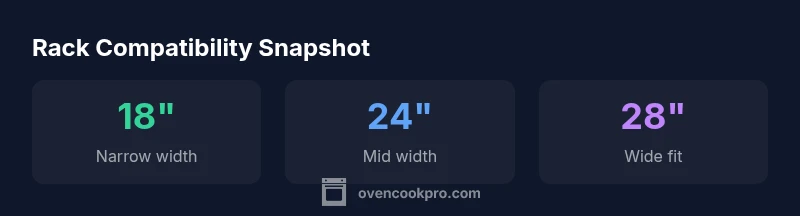
Standard rack dimensions have evolved to balance universal design with model-specific details. The most common widths found in consumer ovens are 18-, 24-, and 28-inch varieties, but each brand may implement slightly different rail spacings and notch positions. The interaction between rack rails and oven grooves determines how securely a rack sits and whether it slides smoothly in and out. A rack that sits high in the cavity can limit airflow and impact baking performance, while one that’s too narrow may slide sideways during use. Understanding these nuances helps you predict fit without trial-and-error testing. In the broader context, the industry tends to favor modular components that can be swapped within a family, but universal compatibility across all brands remains a rarity. If you’re replacing racks, start by confirming your oven’s interior width and the exact notch arrangement on the rails, then cross-check with the rack’s specifications.
Brand-specific vs cross-brand compatibility
Brand-specific racks are designed to align with the unique groove spacing and rail design of a particular manufacturer. Cross-brand compatibility is possible within some brand families that maintain consistent rail geometries, but it is not guaranteed. When racks from another brand are attempted, misalignment can lead to binding, loss of stability, or even damage to the door seals. The safest route is to choose racks that explicitly state compatibility with your oven model or the same family of models. If you must mix brands, measure meticulously and consider temporary adapters or non-slip mats if recommended by the manufacturer. Always consult the oven manual before attempting cross-brand swaps to protect warranty coverage and cooking performance.
How to measure and verify fit in your oven
In most cases, the fastest way to verify fit is a simple measurement routine. Start by measuring the interior width of the oven cavity at the height where the rack sits, then measure the distance between the front rails where the rack’s ledges sit. Compare these measurements to the rack’s stated width and rail spacing. Check the notch positions for each side rail; misaligned notches can cause the rack to tilt or bind. Finally, consult the manufacturer diagrams or online guidance for your specific model. If a rack clearly rubs or binds at any point, do not force it—return it and seek a model that matches your oven’s exact geometry.
Practical tests you can perform safely
After confirming basic compatibility, run quick, safe tests to verify operation. Slide the rack in and out smoothly with no resistance, then place a standard baking sheet or casserole on it to test for wobble or tilt. Check clearance around door seals to ensure no interference occurs during opening or closing. For high-heat tasks, observe whether the rack remains stable under load and does not bow or shift. If the rack hardware shows signs of bending or coating wear, replace it rather than attempting a workaround. These checks help prevent accidents and preserve even cooking results.
When to replace vs modify a rack
If a rack is bent, corroded, or otherwise compromised, replacement is typically the safest option. Modifying racks—such as bending rails or altering notches—can void warranties and create safety hazards. Racks designed for a specific model or brand are easier to source and integrate with existing oven features like glide rails or anti-tip stops. If you’re experimenting with a non-standard fit, consult the manufacturer or a qualified technician. In most cases, using the correct rack for your oven is more reliable than attempting makeshift adaptations.
Common myths about universal racks
A persistent myth is that all racks are interchangeable across brands. In reality, universal claims are overstated and often rely on generic dimensions that many ovens do not honor. Another myth is that any stainless-steel rack will perform the same in all ovens; coatings, rail tolerances, and groove designs can change how efficiently heat is transferred and how much stability you get during use. The reality is that compatibility exists on a spectrum, with cross-brand interchangeability possible only within narrow design families.
Best practices for choosing racks and maintaining them
Choose racks with clear compatibility statements for your oven model, and prefer vendors that provide model diagrams or fit guides. Maintain racks by inspecting rails for burrs or bent edges, and keep them clean to prevent sticking. Store extra racks safely so they don’t warp or rust before next use. When in doubt, contact the manufacturer or consult Oven Cook Pro’s guidance for model-specific recommendations. Consistent use of correct racks enhances cooking performance and extends the life of your oven fixtures.
Rack compatibility at a glance
| Aspect | Typical rack options | Notes |
|---|---|---|
| Width options | "18\"", "24\"", "28\"" | Common but not universal |
| Rail design | Front rails with notches | Compatibility depends on groove spacing |
| Fit verification | Check manual, measure interior | Look for manufacturer guidance |
Questions & Answers
Are oven racks universal across all brands?
No. Racks are typically designed to fit specific brands or model families. Some cross-brand interchangeability exists within the same design lineage, but universal compatibility across all brands is not guaranteed.
Most racks aren’t universal. Check your model’s specs and use brand-consistent racks to be safe.
How can I tell if a rack will fit my oven?
Measure the interior width and rail spacing, compare with the rack’s stated width and groove pattern, and consult the oven’s manual or diagrams for exact specs.
Measure the oven cavity and rails, then compare to the rack specs.
Can I modify a rack to fit a different oven?
Modifying racks is not recommended. It can compromise safety and warranty coverage. Use a rack designed for your oven instead.
Don’t modify racks—stick to brand-compatible options.
What should I do if a rack feels loose in my oven?
Check for bent rails or worn notches. If loosening persists, replace the rack rather than forcing fit.
If it’s loose, inspect for damage and replace if needed.
Are there universal aftermarket racks I can trust?
Some aftermarket racks claim broad compatibility, but verify exact measurements and model compatibility before purchase.
Look for explicit fit guides from the manufacturer.
“Accurate rack fit is the foundation of safe, even cooking. When in doubt, verify specs against the model diagrams and choose brand-consistent options.”
Main Points
- Measure interior width before purchasing a rack
- Racks are usually brand-specific or brand-family compatible
- Check rail spacing and notch positions against your oven
- Avoid forcing misaligned racks to prevent damage
- Consult manufacturer diagrams or Oven Cook Pro guidance