How to Cook with a Convection Oven: A Step-by-Step Guide
Master convection cooking with expert tips on temperature adjustments, airflow, and timing to achieve crisp edges and tender interiors using a convection oven.


Convection ovens circulate hot air with a built‑in fan for faster, more even cooking. To get the best results, preheat, adjust temperatures downward, and give foods space to breathe so air can circulate. This guide from Oven Cook Pro explains how to harness convection for roasting, baking, and everyday meals.
Why convection is worth it
Convection ovens obtain their signature speed and browning through a fan-assisted airflow that circulates heated air around food. This airflow accelerates heat transfer on all surfaces, producing crisper exteriors and more evenly cooked interiors without turning big items as often. According to Oven Cook Pro analysis, convection cooking tends to yield more uniform browning and can reduce the need to reposition items mid‑cook. For home cooks, the practical payoff is simple: better results with less guesswork. Still, mastering convection means understanding how air moves and how to arrange food so the air can reach every surface. In this section we’ll unpack the science in plain terms and translate it into actionable kitchen decisions, from pans to rack placement, and from short roasts to delicate baked goods. You’ll learn not just the what, but the why behind convection practices, so you can adapt recipes you already love rather than starting from scratch.
Convection vs conventional: what's happening under the hood
Traditional ovens rely primarily on radiant heat from the walls and bottom, while convection adds a fan and exhaust to move hot air around. This circulation speeds heat transfer, promoting faster browning on all surfaces and reducing hot spots. Depending on your model, you may have standard convection or true convection (with an additional internal fan and more uniform airflow). For most home cooks, the practical takeaway is that air movement is your ally: it helps dry surfaces for crisp edges and can shorten overall cook times. Understanding this difference helps you decide when to adapt a recipe and when to follow it closely. Keep in mind that some delicate baked goods may react differently to airflow, so treat those recipes with extra care and testing.
Temperature and preheating guidelines
Convection heat is rapid and efficient, so start with a calibrated target temperature rather than the exact conventional recipe. In many cases, lowering the suggested temperature by about 25°F (15°C) yields similar results with less risk of overbrowning. Preheating is important to ensure the oven reaches stable airflow before you introduce food. Use an oven thermometer placed in the center of the rack to verify that the convection oven actually hits the intended temperature. After preheating, keep the door closed as much as possible to maintain consistent air movement. If your model supports true convection, you may notice even quicker heat transfer and more even results across multiple items.
Rack placement and bakeware for optimal airflow
Airflow moves best when food isn’t crowded. Use rimmed baking sheets or shallow roasting pans to maximize air contact with the surface of the food. Place racks in the middle or upper-middle position for most tasks, and avoid stacking pans directly on top of one another. For larger cuts or multiple sheets, rotate their positions halfway through cooking to promote even browning. Metal pans with low sides are preferred in convection cooking because they don’t obstruct the moving air as much as deeper or glass pans.
Cooking guide by category: vegetables, poultry, seafood, and baking
Vegetables: spread in a single layer with space between pieces; drizzle with oil and season well. Poultry and fish: sear or roast at a higher starting temperature for browning, then reduce temperature to let the inside finish without scorching the exterior. Baked goods: use metal pans with light-colored bottoms when possible to promote uniform browning; beware that some delicate cakes may not rise evenly due to airflow. When in doubt, start with shorter times and check for doneness early, then adjust on subsequent attempts.
Common mistakes and troubleshooting
Avoid overcrowding the oven, which blocks air flow and leads to uneven cooking. Don’t open the door frequently during cooking, as interruptions disrupt convection air movement. If browning is uneven, rotate pans or switch rack positions and verify your oven temperature with a thermometer. If a recipe relies on a long bake time, consider dividing it into two shorter batches to preserve airflow. Finally, remember that not all recipes adapt perfectly to convection—use convection for roasts, vegetables, and many baked goods, but some delicate batters may prefer conventional heat.
Energy efficiency, maintenance, and safety
Convection cooking can save time and energy due to faster cooking and even heat distribution, but only if the oven is properly calibrated and not overfilled. Regularly clean spills to prevent burnt flavors and ensure consistent airflow. Use oven mitts and keep a clear area around the oven to prevent accidents. Periodically check the exhaust vent and fan for debris, and recalibrate your thermometer if you notice persistent temperature discrepancies.
Real-world workflow: a sample dinner plan
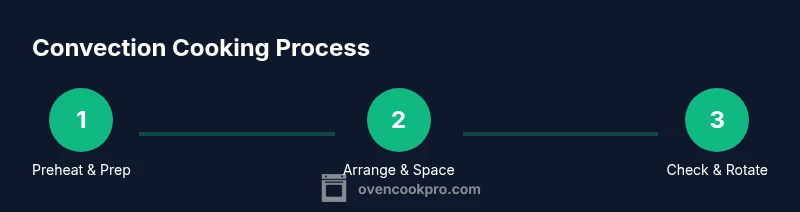
Plan a 60–90 minute dinner that showcases convection’s strengths: roast vegetables on a rimmed sheet, cook chicken pieces on a separate rack, and finish with a quick bake of dinner rolls. Preheat the oven, arrange food with space, and follow the convection temperature guidelines. Halfway through, rotate the sheets for even browning and check doneness with a thermometer. Rest and serve hot for best texture and juiciness.
Tools & Materials
- Oven thermometer(Place near center of oven to verify actual temp.)
- Rimmed baking sheet(Shallow sides to maximize air contact.)
- Wire rack(Elevates food for even convection airflow.)
- Parchment paper or silicone mat(Optional lining for non-stick cooking.)
- Tongs(Turn and reposition foods without damaging surfaces.)
- Oven-safe dish or casserole(Great for casseroles that benefit from airflow.)
- Oven mitts(Protect hands when handling hot cookware.)
- Measuring cups/spoons(Accurate adjustments for convection recipes.)
Steps
Estimated time: 60-90 minutes
- 1
Preheat and prep ingredients
Preheat the oven to the convection temperature specified by your recipe. Gather and prep all ingredients, and line pans as needed. This ensures air can circulate from the moment you begin cooking.
Tip: Verify the oven temperature with the built-in thermometer for accuracy. - 2
Choose bakeware and rack position
Select a rimmed baking sheet or shallow roasting pan. Position the rack in the middle or upper-middle so air flows freely around the food and away from the heating elements.
Tip: Avoid stacking items; crowded surfaces obstruct airflow and browning. - 3
Adjust temperature for convection
If following a traditional recipe, lower the temperature by about 25°F (15°C). Convection often finishes more quickly, so plan to start checking doneness earlier than you would in a standard oven.
Tip: Set an early alarm to check the food 5–10 minutes before the conventional recipe’s finish time. - 4
Arrange food for air exposure
Spread food in a single layer with space between pieces. For multiple items, use separate pans and a little breathing room to allow hot air to circulate.
Tip: If you must stack, stagger items so air can still circulate around each piece. - 5
Monitor and rotate
Reserve space to check progress and rotate pans halfway through cooking. This counters any small temperature variances and promotes even browning.
Tip: Rotate front and back or switch rack positions to balance heat exposure. - 6
Check for doneness
Use visual cues and a thermometer for precision. When appropriate, remove from heat slightly early to account for carryover cooking.
Tip: Always verify internal temperatures for proteins to ensure safe handling. - 7
Rest and serve
Let meats rest briefly to reabsorb juices. Serve while hot for optimal texture and flavor.
Tip: Cover lightly with foil if needed to retain warmth without steaming the surface. - 8
Cleanup and maintenance
Turn off the oven, cool the interior, and wipe any spills promptly. Regular cleaning helps maintain airflow and performance.
Tip: Clean fans and vents periodically to prevent debris buildup that could impede airflow.
Questions & Answers
What exactly is a convection oven and how does it work?
A convection oven uses a fan and exhaust to circulate hot air around the food, promoting faster and more even cooking. The moving air transfers heat more efficiently, browning surfaces evenly and reducing hot spots. This makes roasting and baking more predictable when you apply the right adjustments.
A convection oven uses a fan to move hot air around, cooking food faster and more evenly.
Do I need to preheat a convection oven?
Yes. Preheating helps establish stable airflow and even heat distribution. While some recipes can be started when the oven reaches a target temperature, always verify the actual temp with a thermometer to avoid surprises.
Yes, preheating helps convection cook foods evenly.
How should I adjust temperatures and times for convection?
Lower the conventional recipe temperature by about 25°F (15°C) and start checking for doneness earlier. Times vary by food and thickness, so use a thermometer and visual cues to judge doneness rather than relying solely on clock time.
Lower temps by about 25 degrees and check doneness earlier.
Can I bake delicate items like cakes in a convection oven?
Convection can cause uneven rise in delicate batters. Many bakers prefer conventional heat for cakes, or use a lower convection setting and lighter pans. If you test, monitor closely and consider using a recipe designed for convection brownies or muffins instead.
Convection can be tricky for delicate cakes; consider conventional heat or test carefully.
Is convection energy-efficient?
Convection can be energy-efficient due to faster cooking times and more even heat use. The actual savings depend on how you use the oven—avoid opening the door and overcooking, and utilize the convection mode for appropriate dishes.
Yes, it can save energy with shorter cook times when used properly.
What about using metal vs glass pans in convection?
Metal pans with low sides promote better airflow, while glass can slow heat transfer and lead to uneven browning in convection ovens. When possible, choose metal, dark or light-colored pans depending on the recipe and the browning you want.
Metal pans are generally preferred for convection cooking.
Watch Video
Main Points
- Lower temperatures and monitor times for even browning
- Space foods and rotate pans for consistent results
- Trust an oven thermometer to verify actual temps
- Rest foods briefly to finish flavors